

Walk through the stalls at a typical Saturday craft market in Bath or Edinburgh right now and you might not spot the difference immediately. Framed prints, greetings cards, tote bags, cushions. Some of it hand-painted. Some of it thrown on a wheel. And some of it, if you look closely enough at the seller’s setup, generated by Midjourney, printed on a Gooten fulfilment service, and delivered straight to the stall. The AI art at craft fairs debate has gone from a niche online argument to something real makers are having face-to-face, and it is getting heated.
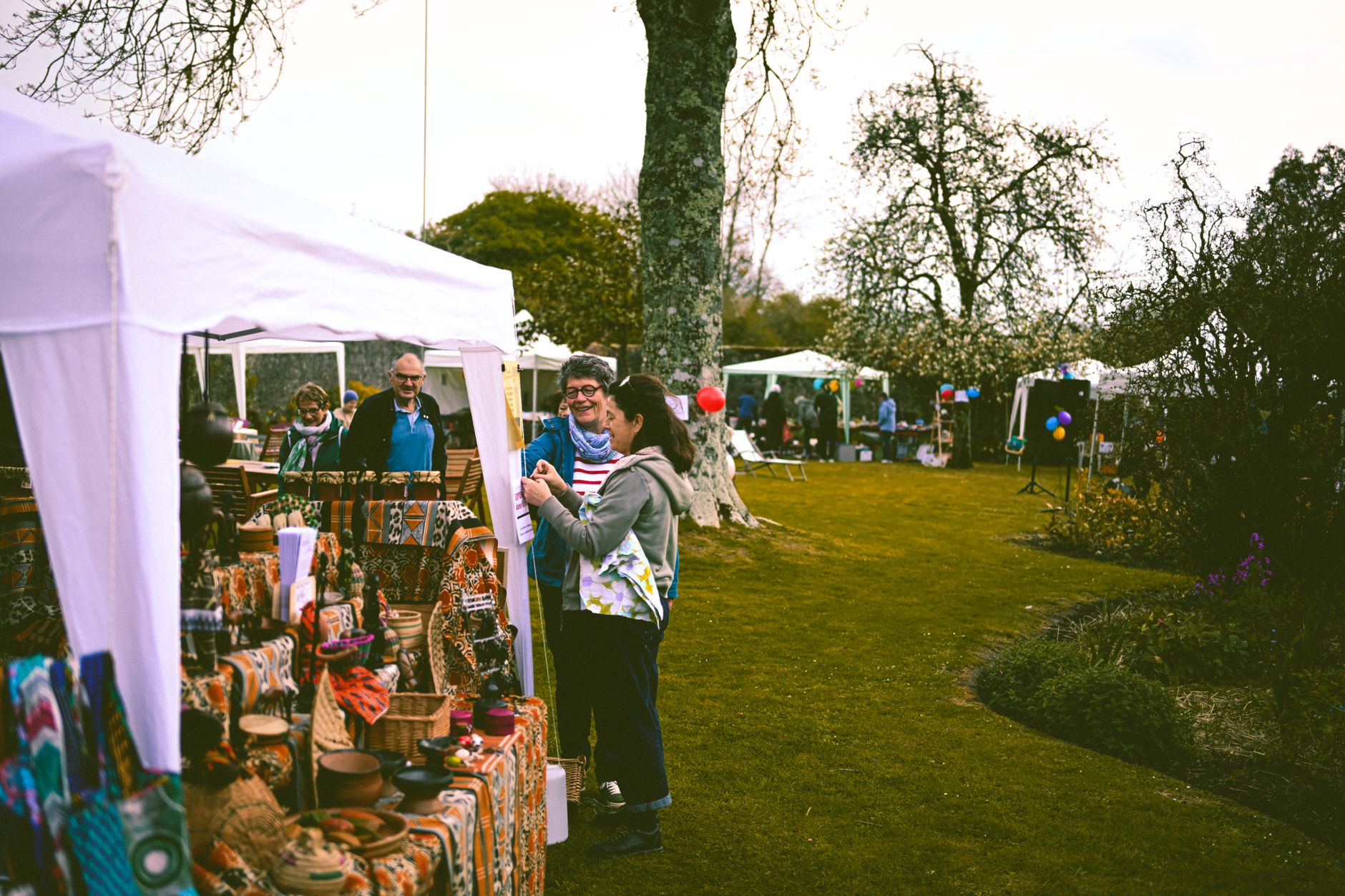
I spent a Saturday in April at a market in Bristol, one of those lovely covered ones with bunting and the smell of fresh coffee, and had a long chat with three different stallholders about this. Two were furious. One was the person doing it. All three were doing a reasonable trade. That’s the uncomfortable bit nobody wants to say out loud: the AI prints were selling. Brightly coloured botanical illustrations, abstract geometric pieces, moody coastal landscapes. They looked good. They were priced competitively, around £12 to £18 a print. And the seller, a man in his thirties who asked me not to use his name, was entirely upfront about his process when I asked directly.
What’s actually happening at these markets?
The practical reality is this: tools like Midjourney, Adobe Firefly and Stable Diffusion have made it genuinely possible to generate a high-resolution image, tweak it, send it to a print-on-demand service, and have museum-quality giclée prints in hand within a week. The upfront cost is low. The time investment is a fraction of what a traditional illustrator or painter puts in. And there is no rule at most UK craft fairs explicitly banning it, because nobody wrote those rules when AI image generation was a niche tech curiosity rather than a mainstream creative tool.
That gap in the rules is the real problem. The Craft and Hobby Association doesn’t currently publish specific guidance on AI-generated work at physical markets, and most independent market organisers are making it up as they go. Some Edinburgh markets now ask sellers to sign declarations stating that work is “original and handmade.” But what counts as original? If you spent two hours writing prompts, iterating, editing, colour-correcting and choosing compositions, is that not creative work? The traditional makers I spoke to would say absolutely not, and they say it with some feeling.
Why traditional makers are so angry
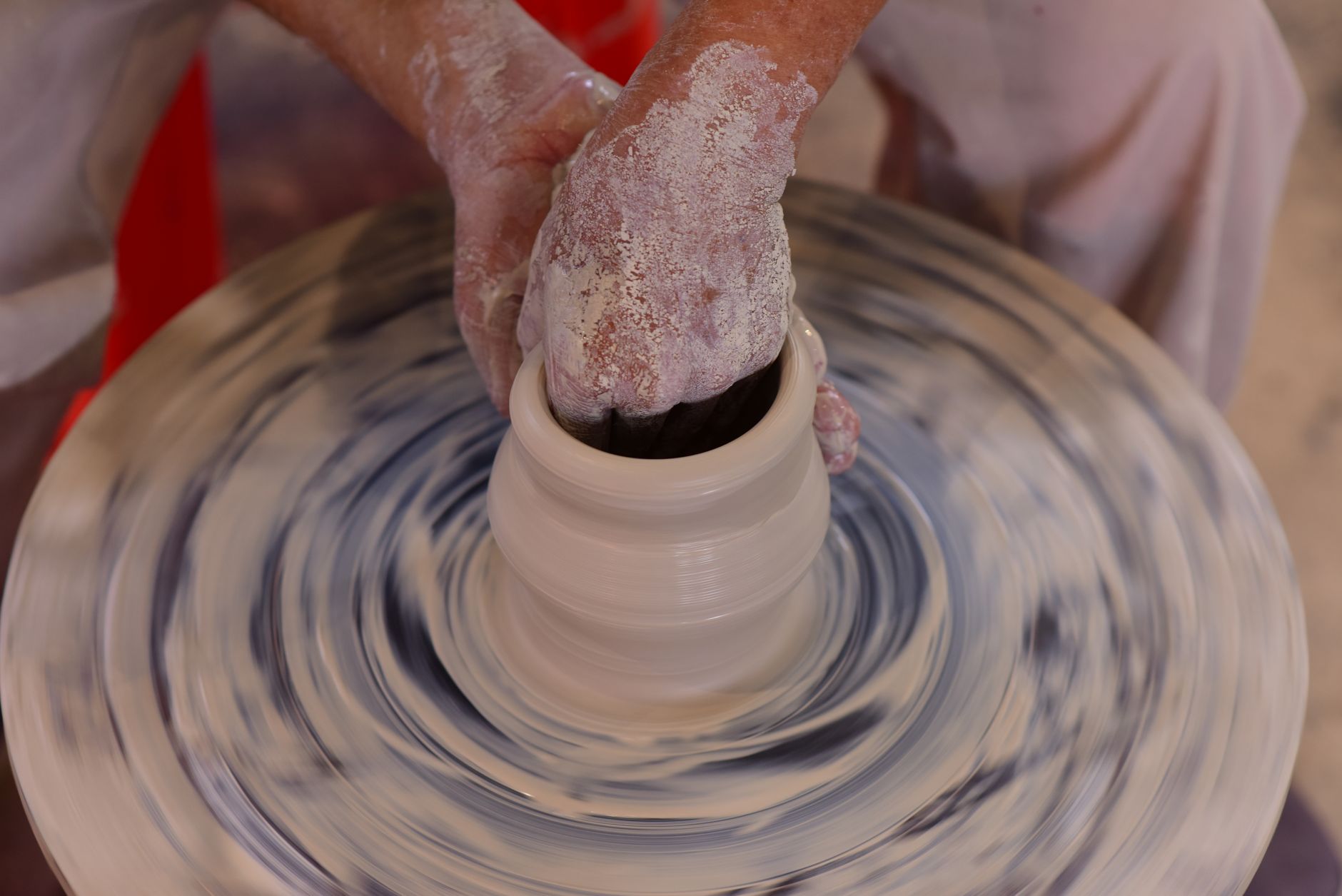
Pottery artist Sarah Vickers, who has sold at the same Bath market for six years, put it plainly: she pays for a stall, pays for materials, pays for a kiln, and has spent years learning her craft. A hand-thrown mug takes her around forty minutes to make, plus drying and firing time. She sells them for £28 to £35. Next to her, someone selling AI prints priced at £15 is not playing the same game, and she knows it. “It devalues the whole thing,” she told me. “People come to craft fairs expecting handmade. That’s the whole point.”
Her frustration is shared widely in the Etsy seller community too, where the same row has been playing out for years. Etsy introduced a policy in 2023 requiring sellers to disclose when items are AI-assisted, but enforcement is thin and the platform is enormous. The physical craft fair world has even less infrastructure to police it. Organisers are volunteers or small businesses themselves; they’re not equipped to run authenticity audits on every stall.
There’s also an emotional dimension that goes beyond economics. Many traditional craft makers got into what they do as a reaction to mass production. The whole philosophy of a craft fair is human skill, time, and love expressed in an object. Sliding an AI print into that context feels, to many, like a category violation. It’s a bit like turning up to a farmers’ market with a Tesco delivery. Technically food, but that’s not the point, is it.
Should craft fairs ban AI art outright?
This is where I find myself genuinely torn. I’ve covered enough tech stories to know that drawing clean lines around AI-assisted work is nearly impossible. A digital illustrator who uses Photoshop’s AI-powered background removal tool, is that AI art? A printmaker who uses a digitally generated pattern as a base layer and then screen-prints over it? The line blurs fast.
Some organisers are moving toward a disclosure model rather than an outright ban. The idea is that buyers get to decide. If a print is AI-generated and clearly labelled as such, and someone still wants to pay £15 for it, that’s their choice. A handful of markets in Edinburgh are trialling this approach for their 2026 summer season. It’s not a perfect solution, but it’s a practical one. Interestingly, this kind of transparent labelling is already standard practice for food markets under Trading Standards rules, there’s no reason it couldn’t work for creative goods.
There’s a commercial angle here too. Craft fairs are social events as much as shopping trips, people want an experience. If you’re planning a day out around a market, finding tickets and listings through somewhere like droptix.co.uk is the easy part; the harder question for organisers is what they’re actually promising buyers when they bill an event as a “craft fair.” That promise is now being stress-tested harder than ever.
The AI art at craft fairs argument connects to a broader pattern I’ve noticed: the subscription fatigue piece we ran a few months back touched on how people are increasingly suspicious of what they’re actually paying for. Authenticity matters more in that climate, not less. And it’s worth noting that the cashless payment technology now standard at most markets, covered when we looked at how cashless systems are changing UK festivals, means transaction data could theoretically help organisers track what’s selling and from whom. Whether anyone has the appetite to use it that way is another question.
What makers and buyers can actually do right now
If you’re a traditional maker, the most useful thing is to pressure the specific markets you sell at to add explicit language to their vendor agreements. Vague “handmade only” clauses don’t cut it anymore, you need clear definitions of what qualifies, ideally with a disclosure requirement for any AI-assisted work. Several markets run by local councils already have procurement and transparency rules baked into their vendor contracts; that’s a useful template.
If you’re a buyer and this matters to you, ask. Just ask the seller directly how the work was made. I did it repeatedly that Saturday in Bristol and nobody took offence. The AI print seller was straightforwardly honest. The potters were delighted to explain their process. That conversation is the market doing what it’s supposed to do.
And if you’re the person selling AI prints, I’d genuinely encourage transparency. Hiding the process when a customer asks directly is what poisons the well for everyone, including you. There’s a growing audience of buyers who are perfectly happy to purchase an AI-assisted print if they know what they’re getting. That’s a legitimate market. Just don’t pretend it’s something it isn’t at a venue built on the promise of human craft. The backlash, when it comes, is not going to be pretty. And in a world of tight-knit local trading communities, reputations travel fast.
Frequently Asked Questions
Is it legal to sell AI-generated art at UK craft fairs?
Yes, it is legal in the UK to sell AI-generated artwork, provided you’re not infringing copyright in the images used to train the model or in any reference material. However, many craft fairs have their own vendor rules about what counts as ‘handmade’, so always check the specific market’s terms before applying for a stall.
Do UK craft fairs ban AI art?
Most UK craft fairs don’t yet have explicit bans on AI-generated work because the rules were written before AI image generation became mainstream. Some markets in Edinburgh and Bath are now introducing disclosure requirements or updating their vendor agreements, but formal bans remain rare as of 2026.
Does Etsy require sellers to disclose AI-generated artwork?
Yes, Etsy introduced a policy requiring sellers to disclose when items are AI-generated or AI-assisted. In practice, enforcement has been inconsistent given the sheer scale of the platform, and many sellers either don’t know the rule or don’t follow it.
How can buyers tell if craft fair art is AI-generated?
The most reliable method is simply to ask the seller directly how the work was made. Visual signs can include unusually high consistency across a large print range, very low prices for what appears to be fine art, and the absence of any original physical artwork on display. Disclosure labels are starting to appear at some markets but are not yet standard.

Leave a Reply