Category: Articles

  • Why the ONS Says Brits Are Working More Hours but Feeling Less Productive Than Ever

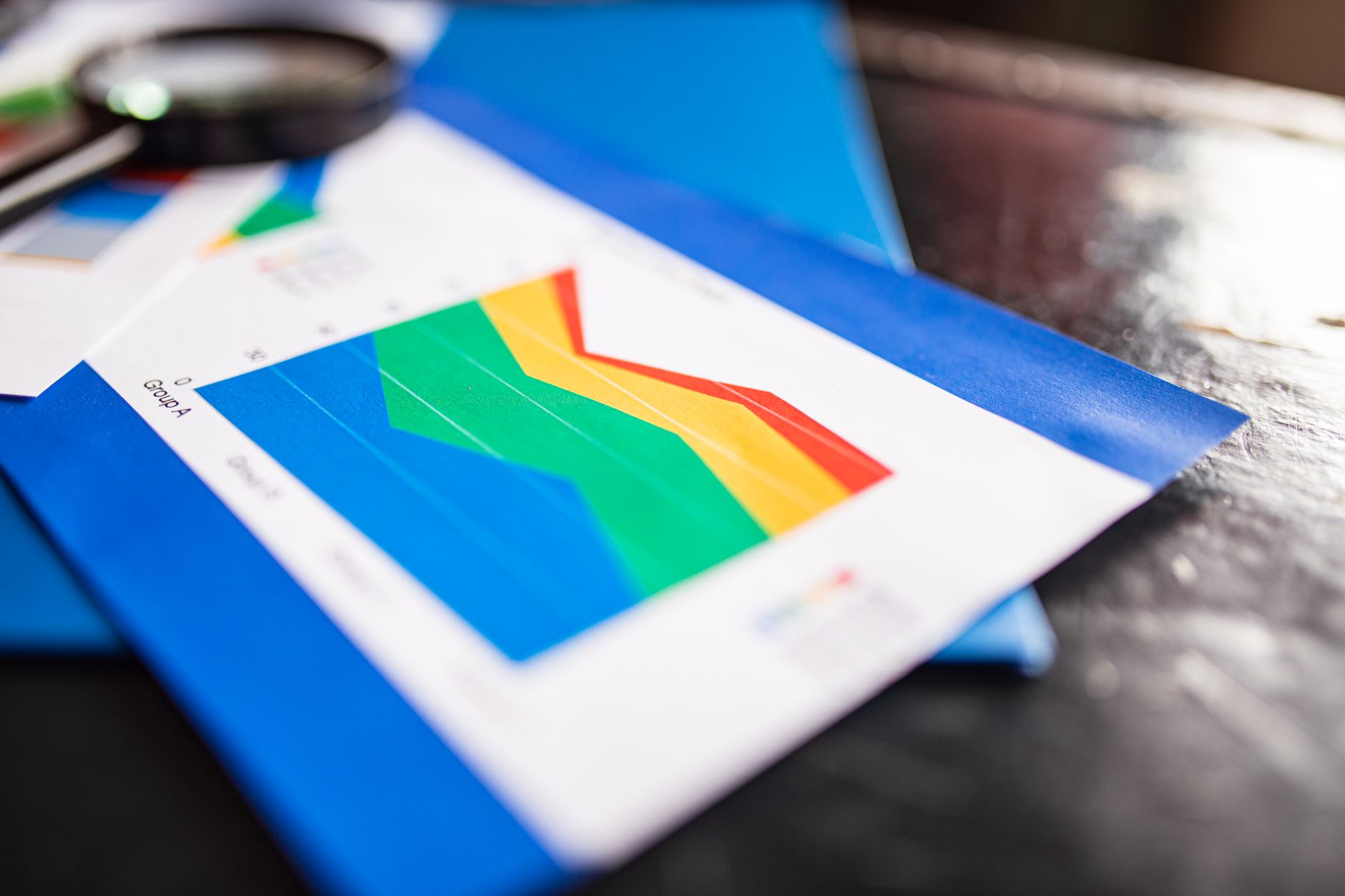
    Something odd is happening in British workplaces. Hours are going up. Output is flatlining or, in some sectors, actually sliding. And the latest UK productivity statistics 2026 from the Office for National Statistics make for genuinely puzzling reading. We’re a nation that’s busier than ever on paper, yet somehow the numbers aren’t adding up.

    The ONS published its quarterly productivity bulletin earlier this year and the headline figures are hard to spin positively. Output per hour worked across the UK economy crept up by just 0.3% year-on-year in the final quarter of 2025, well below the long-run average of around 2%. Meanwhile, total hours worked across the economy hit a record high. So Brits are turning up, logging on, attending meetings, sending emails and sitting at desks for longer than at any point in recent memory. The returns on all that effort? Quietly disappointing.

    What the ONS data actually shows

    The ONS breaks productivity down by sector, and the picture varies quite a bit depending on where you look. Manufacturing held relatively steady, with output per worker broadly matching hours put in. Financial services showed modest improvement. But the broader services sector, which accounts for the largest chunk of the UK economy, is where the numbers get uncomfortable. Output per hour in professional and business services barely moved, despite those workers consistently logging the longest hours of any group tracked.

    Public sector productivity is its own separate headache. The ONS figures show NHS and education output is still recovering from disruption caused by industrial action and structural backlogs. Hours are high, but the lag between input and measurable output in those sectors means the maths look worse than the reality on the ground, though that’s cold comfort if you’re a teacher or a nurse running on fumes.

    You can explore the full dataset directly on the ONS labour productivity pages, and I’d genuinely recommend having a poke around. The sector-level breakdowns are where the interesting stuff lives.

    Is remote working making things worse?

    This is where the debate gets spicy. A significant chunk of UK workers are still in some form of hybrid or fully remote arrangement. Proponents of remote work point to commute time saved, reduced stress, and greater autonomy as productivity boosters. Sceptics, particularly in senior management at larger firms, argue that something is being lost in translation, collaboration, mentorship, the ambient knowledge-sharing that happens when you’re physically in the same room.

    The data doesn’t give a clean answer. Some studies (Cardiff University ran a decent one in 2024) found remote workers self-reported higher output but struggled with creative tasks and cross-team projects. Others found no meaningful difference once you controlled for job type. What does seem clear from the ONS figures is that the sectors with the highest rates of remote or hybrid working are also the sectors where the productivity gap is most visible. Whether remote work is causing that gap, or whether those sectors were already struggling for other reasons, is genuinely hard to untangle.

    Tech overload: the hidden drain nobody wants to talk about

    Here’s a theory worth taking seriously. UK workers in 2026 are managing more tools, platforms, and communication channels than at any point in history. Slack, Teams, email, project management software, video calls, shared documents, AI assistants, approval workflows. The average knowledge worker in a mid-sized UK firm is context-switching dozens of times per hour.

    There’s a real cost to that. Research from the Chartered Institute of Personnel and Development (CIPD) suggests that cognitive overload from digital tool sprawl is a growing factor in workplace fatigue and reduced output quality. You spend so much time managing the systems meant to make you productive that actual work gets squeezed into the margins. Ironic, and kind of exhausting to think about.

    It connects interestingly to broader conversations about how technology shapes our daily habits. We’ve written before about AI companions getting weird and genuinely useful, and there’s a related question about whether the AI tools flooding into British workplaces right now are actually helping workers do more, or just adding another layer to manage. Early signs suggest it’s a bit of both, depending heavily on how well a business has thought about implementation.

    Longer hours don’t mean better results

    This probably isn’t news to anyone who’s ever worked a 55-hour week and emerged from Friday feeling like they achieved about half as much as they would have in 35 focused hours. But UK culture has a deeply embedded hours-as-signal problem. Staying late reads as dedication. Logging off at 5pm reads as laziness, even when the person leaving at 5pm produced twice the output of the person still at their desk at 7pm.

    The UK productivity statistics 2026 reflect this. More hours in, diminishing returns out. And it feeds on itself. When teams are overworked, decision quality drops, errors creep in, and rework goes up. You end up with a lot of activity that doesn’t move anything forward in a meaningful way.

    It’s a bit like the strange logic behind Brits buying land they’ve never visited: the action feels significant, the investment of time and money is real, but whether anything productive actually results is another question entirely.

    What would actually shift the dial?

    A few things come up consistently when economists and workplace researchers discuss the UK’s long-running productivity puzzle. Capital investment is one: British firms invest less per worker in machinery, software, and infrastructure than their German or French counterparts, and that gap has real consequences for what each worker can produce in a given hour.

    Skills and training are another. The UK has a persistent shortage of vocational and technical skills in areas that directly drive productivity growth. Apprenticeship uptake has been sluggish despite various government schemes, and many employers still don’t budget meaningfully for continuous development.

    And then there’s management quality, which is the uncomfortable one. Poor management is, according to several ONS-linked studies, one of the single biggest drags on UK firm productivity. Meetings that could be emails, processes that exist because they always have, and a reluctance to trust employees to manage their own time all compound the hours-versus-output mismatch.

    The question of how we actually change any of this is genuinely hard. And the UK productivity statistics 2026 suggest we’re not cracking it yet. But at least people are talking about it, which is probably the first step. The second step is probably closing a few browser tabs.

    Frequently Asked Questions

    What do the UK productivity statistics 2026 actually show?

    The ONS figures show that output per hour worked grew by just 0.3% year-on-year in late 2025, well below the long-run average of around 2%. Total hours worked hit a record high, meaning Brits are working more but producing proportionally less.

    Why is UK productivity so much lower than other European countries?

    Several factors are at play: lower capital investment per worker compared to Germany and France, persistent skills gaps in technical and vocational areas, and weaker management practices in many UK firms. The ONS and CIPD have all flagged these as long-standing structural issues.

    Does remote working hurt productivity in the UK?

    The evidence is mixed. Some sectors with high rates of hybrid or remote working show productivity gaps, but causation isn’t clear. Research suggests remote work helps with focused individual tasks but can hinder collaboration and cross-team projects.

  • Britain’s Strangest Vending Machines: From Bait and Tackle in Norfolk to Hot Pasties in Cornwall

    Britain’s Strangest Vending Machines: From Bait and Tackle in Norfolk to Hot Pasties in Cornwall

    Vending machines used to mean one thing: a slightly warm can of Fanta and a packet of Wotsits that gets stuck halfway down. Britain, however, has quietly been doing something far more interesting with the format. Across the country, from fishing villages in East Anglia to tin-mine country in Cornwall, genuinely bizarre and often wonderful machines are dispensing things nobody thought could come out of a box. The unusual vending machines popping up across the UK right now are, frankly, a joy.

    Unusual vending machine in a British village stocked with local pasties and farm produce

    Hot pasties from a machine, no queue required

    Start in Cornwall, where at least two locations now offer freshly baked pasties from heated vending machines. One, near Redruth, runs 24 hours a day and has reportedly become a minor local legend. The pasties arrive properly warm, in a paper bag, and cost around £4.50. For anyone who has ever stood shivering outside a closed bakery at half past eight on a Sunday morning, this is genuinely life-changing technology. Local bakers supply the machines directly, which means the product is the real thing rather than some frozen industrial approximation.

    It sounds gimmicky. But the business logic is solid: a small bakery extends its reach beyond shop hours without hiring extra staff. The machine does the overnight shift. Brilliant, really.

    Live bait in Norfolk, because of course

    Norfolk has its own contribution to the genre. Anglers near the Broads have had access to live bait vending machines for a few years now, and the format has spread to a handful of spots across Suffolk too. You tap your card, choose your maggots or worms, and off you go. The machines are refrigerated to keep things fresh (for the bait, not the angler), and they typically sit outside tackle shops or near popular fishing spots, operating when the shop itself is shut.

    It is perhaps the most niche product imaginable for a vending machine, but it works perfectly. Fishermen tend to head out at obscene hours of the morning. The local tackle shop opens at nine. A refrigerated box of worms available at 4am is not a joke; it is a genuine service.

    Fresh eggs, raw milk, and the great British farm shop wall

    Rural Britain has been running egg vending machines for years now, but the category has expanded considerably. Raw milk dispensers are turning up outside farms in Cheshire, Shropshire, and Yorkshire, where customers bring their own bottles and fill up by the litre. These operate under specific Food Standards Agency guidance since raw milk carries different rules to pasteurised, and farms have to be licensed to sell it. The machines themselves are essentially large refrigerated tanks with a tap and a payment terminal bolted on.

    Then there are the full farm shop walls: multi-slot machines stocked with seasonal veg, cut flowers, jams, and locally reared meat packs. Somerset has several. Derbyshire has a few. They look like something from a slightly wholesome science fiction film, and they are doing real business for small producers who cannot afford to staff a shop seven days a week.

    Books, vinyl, and things that make you stop walking

    Cities are getting interesting too. A second-hand book vending machine appeared in Sheffield last year, run by a local indie bookshop as a kind of pop-up extension of its collection. You scan a QR code to browse what’s in stock, then pay and retrieve your book. It caused a minor sensation on local social media and was visited by people who had no intention of buying a book but just wanted to see if it was real.

    Edinburgh has had a vinyl record machine tucked in a shopping centre near Princes Street, and there are whispers of a similar setup appearing in Manchester’s Northern Quarter. These are less about convenience and more about theatre: the machine as a bit of a spectacle that pulls people in. Which, in an era where the internet is full of things competing for your attention, a physical oddity on a street corner has its own quiet power.

    The weirdest of the lot

    A hotel in the Cotswolds offers a minibar-style vending machine in the lobby dispensing locally made gin, artisan chocolate, and dog treats. Yes, dog treats. Because the hotel is dog-friendly, and somebody at that hotel had the right idea at exactly the right moment.

    A leisure centre in Leeds trialled a sports nutrition machine stocked with protein bars, electrolyte drinks, and resistance bands. A gym that never fully closes apparently needs a vending machine that treats you like a serious athlete rather than someone who wants cheese and onion crisps at midnight.

    And in a slightly surreal twist, a vending machine appeared in Dundee selling locally made ceramics. Mugs, small bowls, and decorative pieces wrapped carefully in tissue paper and dispensed from a machine that looked from the outside like it ought to contain snacks. The ceramics were made by an artist collective, and the machine was partly a gallery experiment, partly a practical shop. It sold out within a week.

    Why is Britain suddenly so good at this?

    Part of it is infrastructure: contactless payments are so embedded in UK life now that the friction of using a vending machine has almost entirely disappeared. You tap your card, you get your thing. The rise of contactless and mobile payment made the vending machine format viable for far more categories of product than a coin slot ever could.

    Part of it is also the small business mentality. A lot of these machines are run by independent producers and local shops, not big corporations. They are filling specific local gaps rather than trying to scale nationally. The pasty machine works in Redruth because there is a Redruth bakery willing to supply it. The egg machine works outside a farm because the farm is already there.

    There is something quietly appealing about all of this. In the same way that Britons have been making oddly creative decisions about what to buy and where, the unusual vending machines scattered across the UK feel like a very British kind of ingenuity: practical, slightly eccentric, and often attached to a very specific local problem that someone decided to just solve.

    The format is not replacing shops. It is doing something different: extending access, filling gaps, and occasionally just delighting people who walk past and think, wait, is that machine selling live maggots? Yes. Yes it is. And it is probably doing quite well.

  • The Strange Boom in Britons Buying Land They’ve Never Visited

    The Strange Boom in Britons Buying Land They’ve Never Visited

    Somewhere in rural Perthshire, there is a 10-square-metre patch of ground that belongs to a bloke in Croydon who bought it during his lunch break for £29.99. He has never been there. He might never go. And yet, technically, he is a Scottish landowner. Welcome to the genuinely strange and quietly booming world of buying land in UK online micro plots, where the dream of owning a slice of countryside has been sliced, packaged, and sold at a price point lower than a large pizza.

    This is not a niche hobby anymore. Websites like Highland Titles, Established Titles (before its viral controversy), and a growing cluster of newer platforms have shifted hundreds of thousands of small land parcels over the past decade. The market has accelerated since 2020, when lockdowns made city dwellers suddenly nostalgic for open space they couldn’t reach. Searches for rural land ownership spiked, and a whole cottage industry of micro-plot vendors sprang up to meet them. Some of these businesses are perfectly legitimate conservation projects. Others are… let’s say, creatively marketed.

    Scottish Highland moorland representing the appeal of buying land in UK online micro plots

    What Do You Actually Own When You Buy a Micro-Plot?

    This is where it gets interesting, and also where a lot of buyers get a surprise. In Scotland, land law operates differently to England and Wales. Under Scots law, land ownership requires registration in the Registers of Scotland to be legally recognised. A parcel smaller than 0.5 hectares cannot be individually registered as a separate title in most cases, which means your 10-square-metre plot almost certainly does not appear in the Land Register with your name on it.

    What you typically receive instead is a personal title deed, which is a document that looks impressive and may well be beautifully printed on parchment-style paper, but which carries no legal weight in Scots property law. The underlying title remains with the company that sold it to you. You are, in effect, a beneficiary of a souvenir arrangement rather than a genuine landowner in any enforceable sense.

    That does not mean you’ve been robbed. Most reputable micro-plot companies are upfront that what they sell is a gift experience with conservation value attached. Highland Titles, for example, manages nature reserves in Argyll and uses the proceeds for rewilding. Buyers who understand what they’re getting, essentially a fun novelty with a conservation donation wrapped inside it, often come away perfectly happy. The problem arises when the marketing leans heavily on phrases like “become a Scottish Laird” without making the legal situation crystal clear.

    Woodland Parcels Are a Different Kettle of Fish

    Actual woodland ownership is another matter entirely, and a genuinely growing market. Platforms like Sylva Foundation and various land auction houses are seeing real demand from UK buyers wanting to own an actual, legally registered parcel of woodland, typically ranging from half a hectare up to several hectares. These are real purchases, with proper solicitor involvement, Land Registry or Registers of Scotland entries, and actual boundaries you can walk.

    Prices vary wildly. Ancient woodland in the Scottish Highlands might go for £3,000 to £8,000 per hectare. Productive commercial forestry in Wales or the Borders can run significantly higher. Some buyers are motivated by environmental values, others by the idea of having a genuinely private outdoor space for camping, foraging, or simply wandering around. The Woodland Trust estimates woodland coverage in the UK sits at around 13%, one of the lowest rates in Europe, which adds a conservation dimension to every sale.

    The Viral Problem That Shook the Market

    In late 2022, a video exposé on YouTube tore into Established Titles, a company that had run enormous social media ad campaigns suggesting buyers were purchasing genuine Scottish aristocratic titles. The backlash was swift, enormous, and pretty entertaining to watch unfold in real time. The company subsequently pivoted its messaging and faced significant scrutiny. The incident did something useful, though: it forced the broader micro-plot sector to tighten up its claims and made buyers considerably more sceptical.

    Since then, buying land in UK online micro plots has become a more cautious transaction. Buyers ask harder questions. Reputable vendors publish their conservation credentials more prominently. And a few dodgy operators have quietly disappeared from the search results. Progress, of a sort.

    Why People Keep Buying Anyway

    The honest answer is that the appeal is real, even when the legal ownership isn’t. There is something genuinely satisfying about pointing at a map and saying “that bit, right there, that’s mine.” For city dwellers cooped up in a third-floor flat in Leeds or a terraced house in Bristol, the psychological pull of having any relationship with land, however nominal, is surprisingly powerful.

    Gift-givers love it. It solves the perpetual problem of what to buy the person who has everything. A plot certificate in the Scottish Highlands, a framed map with a named area circled in red, and a backstory about rewilding feels infinitely more interesting than a gift voucher. The gifting angle has probably driven more micro-plot sales than any conservation argument ever could.

    And for those who want something more substantial, actual small-acreage land sales via platforms like Landlink, LandWatch UK, and traditional estate agents have also ticked upward. People are buying actual fields, paddocks, and small woodland plots as genuine assets, sometimes for growing food, sometimes just because they can, and sometimes as a very slow-burn investment play on rising rural land values.

    What Should You Check Before You Buy?

    If you’re eyeing up buying land in UK online micro plots, a few practical checks are worth doing before you hand over any money. For micro-plots marketed as novelty gifts, check whether the company has genuine conservation credentials, look for charity registration numbers or partnerships with named environmental organisations, and read the small print about what the “deed” actually confers.

    For genuine woodland or rural land purchases, you want a solicitor experienced in rural property (especially if buying in Scotland, where the legal system differs from England and Wales), proper title searches, and clarity on access rights, which in Scotland are governed by the Land Reform (Scotland) Act 2003 and are quite different from English common law. Boundary disputes on unregistered rural land can be genuinely messy, so getting everything formally recorded is non-negotiable.

    The micro-plot market is, at its best, a charming collision of conservation funding, romantic escapism, and the internet’s ability to sell anything to anyone. At its worst, it’s a novelty that oversells its legal substance. The trick is knowing exactly which one you’re buying into, and being fine with it either way.

    Frequently Asked Questions

    Is buying land in UK online via micro-plot sites legally recognised?

    For very small plots in Scotland, typically under 0.5 hectares, individual registration in the Land Register is generally not possible, so the personal deed you receive carries no enforceable legal ownership rights. Most reputable micro-plot companies sell these as novelty or conservation gifts rather than genuine property transfers. Larger parcels bought through proper land auctions or estate agents can be fully registered and are legally recognised.

    Can I call myself a Scottish Laird if I buy a micro-plot?

    Some companies market their plots with the suggestion that buyers can use the title of Laird, Lord, or Lady. These are not legally recognised titles in the UK and carry no social or legal standing. The Court of the Lord Lyon in Scotland oversees heraldic titles, and a souvenir land deed grants no rights under that system whatsoever.

    How much does a micro-plot of Scottish land cost?

    Novelty micro-plots typically range from around £25 to £60 for a very small square of land, often sold as a gift package with a certificate and map. Genuine small woodland or rural land parcels in Scotland can cost anywhere from £3,000 to over £10,000 per hectare depending on location, tree cover, and access. These are entirely different products despite sometimes being marketed similarly.

    What rights do I have on a woodland plot I actually own legally?

    On a formally registered woodland plot, you generally have the right to use the land, manage the trees, camp, and restrict others from certain activities, though Scottish access law under the Land Reform (Scotland) Act 2003 gives the public broad rights to roam responsibly on most land. You cannot build permanent structures without planning permission, and any felling of trees may require a felling licence from Forestry Commission Scotland.