

Rachael, 34, a software developer in Manchester, hasn’t touched a banknote in over two years. Her morning coffee is tapped on her watch, her market stall cheese is paid via a card reader, even the cleaner who visits every fortnight now sends a payment link. She finds the whole thing completely unremarkable. “Cash feels like sending a fax,” she told me. “It’s not that I’m making a statement, I just genuinely never need it.” And for a growing slice of urban Britain, she’s right. But spend five minutes thinking about cashless living UK problems and a much messier picture emerges almost immediately.
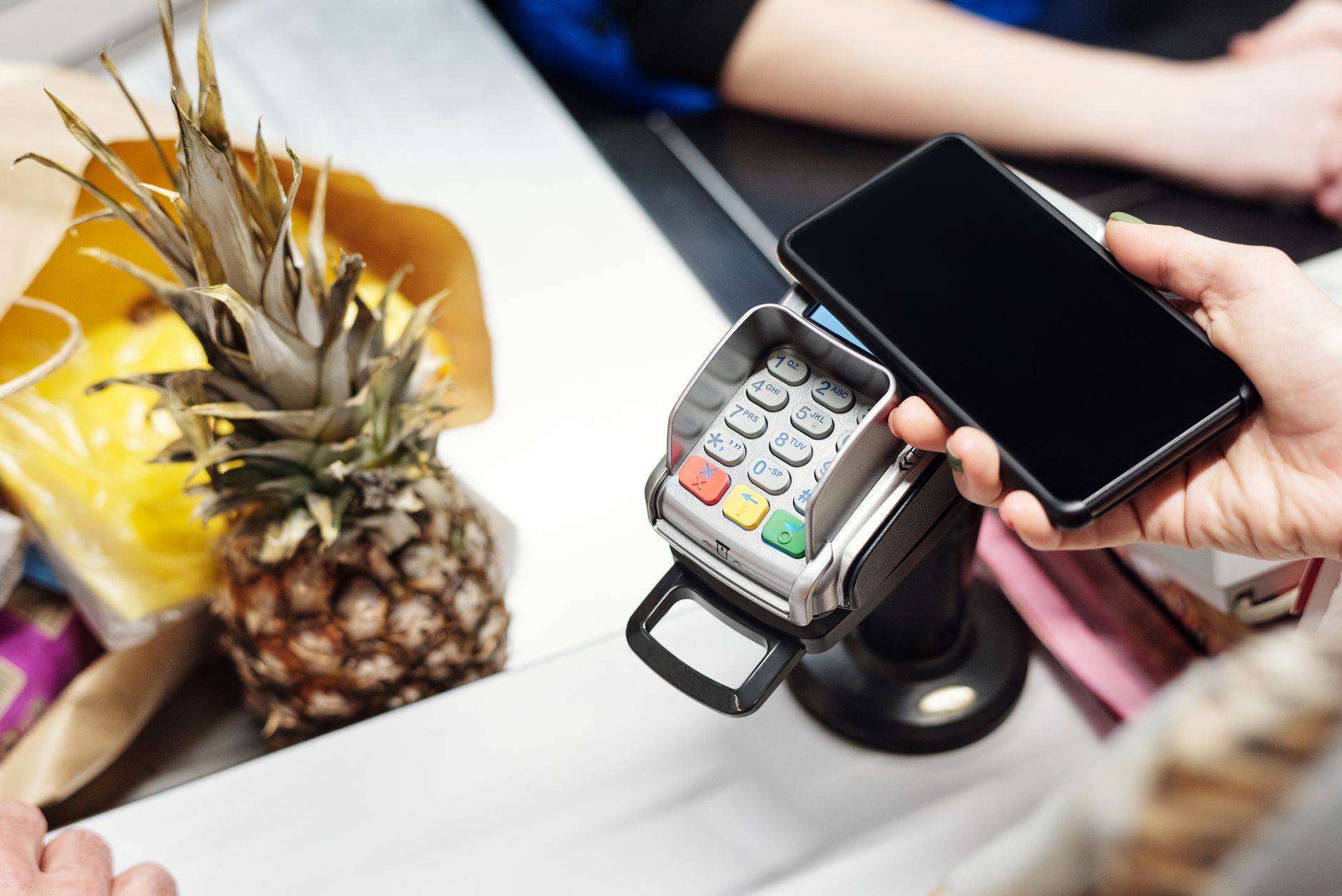
The cashless converts: life without a wallet
Rachael isn’t alone. According to UK Finance, debit card payments overtook cash transactions back in 2017, and that gap has widened every year since. By 2025, cash accounted for only around 12% of all UK payments. Contactless spending is now so embedded in city life that plenty of people under 35 genuinely couldn’t tell you what a £2 coin looks like on the back without checking.
For the cashless crowd, life is genuinely smoother. No hunting for coins at parking meters (most now have apps), no standing at the cash machine before a night out, no slightly awkward “I’ll pay you back” moment after a group meal. Splitting bills with apps like Monzo or Starling has turned a social anxiety classic into a two-second tap. I’ve used Monzo for about four years now and I’d struggle to go back, it’s just frictionless in a way that physical money isn’t.
Where cashless living falls apart completely
Drive forty minutes outside any major British city and the picture shifts sharply. In market towns across Shropshire, North Yorkshire, and the Welsh Marches, cash is not a nostalgic preference, it’s infrastructure. The village post office accepts card for some services but not others. The local butcher, who’s been on the same corner since 1987, has a card reader that loses signal every time it rains. The Saturday market? Mostly cash only, thank you very much.
There’s also the bank branch problem. The UK has lost well over 5,000 bank branches since 2015, with rural communities hit hardest. When the nearest ATM is six miles away and the bus runs twice a day, the idea that “anyone can go cashless” starts to sound less like progress and more like something dreamt up entirely in a glass office in Canary Wharf.
Rural GPs’ surgeries, church fundraisers, school cake sales, local fetes, these aren’t just charming anachronisms. They’re how community life actually functions in thousands of towns and villages. And they run on cash. Tell a 78-year-old in Ludlow that she should download an app to pay for her raffle tickets and you’ve missed the point entirely.
The elderly and the genuinely excluded
This is where cashless living UK problems get serious rather than merely inconvenient. Age UK estimates that around 2.4 million older people in the UK rely primarily on cash for their day-to-day spending. For some, this is habit. For others, it’s necessity, dementia, limited mobility, poor eyesight, or simply no smartphone make digital payments actively dangerous or inaccessible.
There’s something troubling about a system that quietly penalises people for not keeping up. A pensioner who withdraws £40 on Monday morning and manages her week on that has a spending system that works perfectly for her. The problem isn’t her system. The problem is when the world around her stops accepting it. Shops that go card-only, market stalls that raise an eyebrow when someone produces a tenner, parking systems with no coin slot, these aren’t neutral design choices. They’re exclusions dressed up as convenience.
There’s also a safety dimension people rarely talk about. Cash gives people who are financially abused, often elderly people controlled by family members, a private, traceable-only-to-them resource. When physical money disappears from the system, so does that quiet lifeline. Financial abuse charities have flagged this repeatedly, and it deserves far more attention than it gets.
The hidden costs of going card-only
For small businesses, the pressure to go cashless carries its own awkwardness. Card processing fees, typically between 1.5% and 2.5% per transaction, aren’t huge individually but stack up fast for a market trader shifting £300 of produce on a Saturday morning. Many small sellers pass this on quietly through pricing or absorb it as a cost of doing business. Some genuinely can’t afford to. The romance of the “cashless high street” tends to be written by people who’ve never run a market stall in February.
And then there’s what happens when the system goes down. When Visa experienced a major outage across Europe in 2018, it was a sharp reminder that the entire card payment infrastructure is one technical failure away from gridlock. Cash doesn’t crash. It doesn’t need a signal. It doesn’t require a working terminal or a charged battery. In a power cut or a rural area with patchy 4G, a fiver remains a fiver.
Is there a middle ground Britain can actually reach?
The Access to Cash Review, chaired by Natalie Ceeney, made clear several years ago that financial exclusion through cashlessness isn’t a theoretical risk, it’s already happening. The Financial Conduct Authority has since taken steps to protect cash access, and the government has legislated to require banks to maintain reasonable cash access in communities. Whether enforcement keeps pace with reality is another question entirely.
Some innovations are genuinely helpful. Post offices now offer over-the-counter cash services on behalf of most major banks, which has softened the blow of branch closures somewhat. Banking hubs, shared spaces where multiple banks rotate staff, have opened in places like Brechin and Cambuslang, and more are planned. These aren’t perfect solutions but they’re something.
I’d argue what Britain actually needs is a more honest conversation about who gets to define what “normal” looks like. The cashless converts in Manchester and London aren’t wrong to prefer tapping their phones, but their experience is not universal, and building a payment system around it without adequate safety nets is a choice, not an inevitability. The postcode lottery that shapes so much of British life extends to something as basic as how you pay for a pint of milk.
Digital convenience and physical inclusion don’t have to be opposites. But right now, in too many market towns and too many kitchen tables where an elderly person counts out coins carefully, they feel exactly like that. The UK’s cashless revolution is real, but so are the people it’s leaving behind, and they deserve a lot better than being treated as an afterthought in someone else’s frictionless future. You’ll notice nobody’s writing “tap to pay” think-pieces from a village in the Dales where the signal cuts out halfway through a transaction. Maybe they should.
Leave a Reply