Something a bit uncomfortable has been happening on Britain’s motorways. Drivers who consider themselves perfectly law-abiding are opening letters from the DVLA and finding fines they absolutely did not expect. Smart motorway camera fines in the UK have been climbing steadily, and a significant chunk of them are going to people who genuinely had no idea they were doing anything wrong. I’ve spoken to a few people in this position, and the confusion on their faces is real. The cameras are multiplying, the rules are genuinely complicated, and the enforcement is, depending on who you ask, either a sensible modernisation or a spectacularly effective revenue machine.
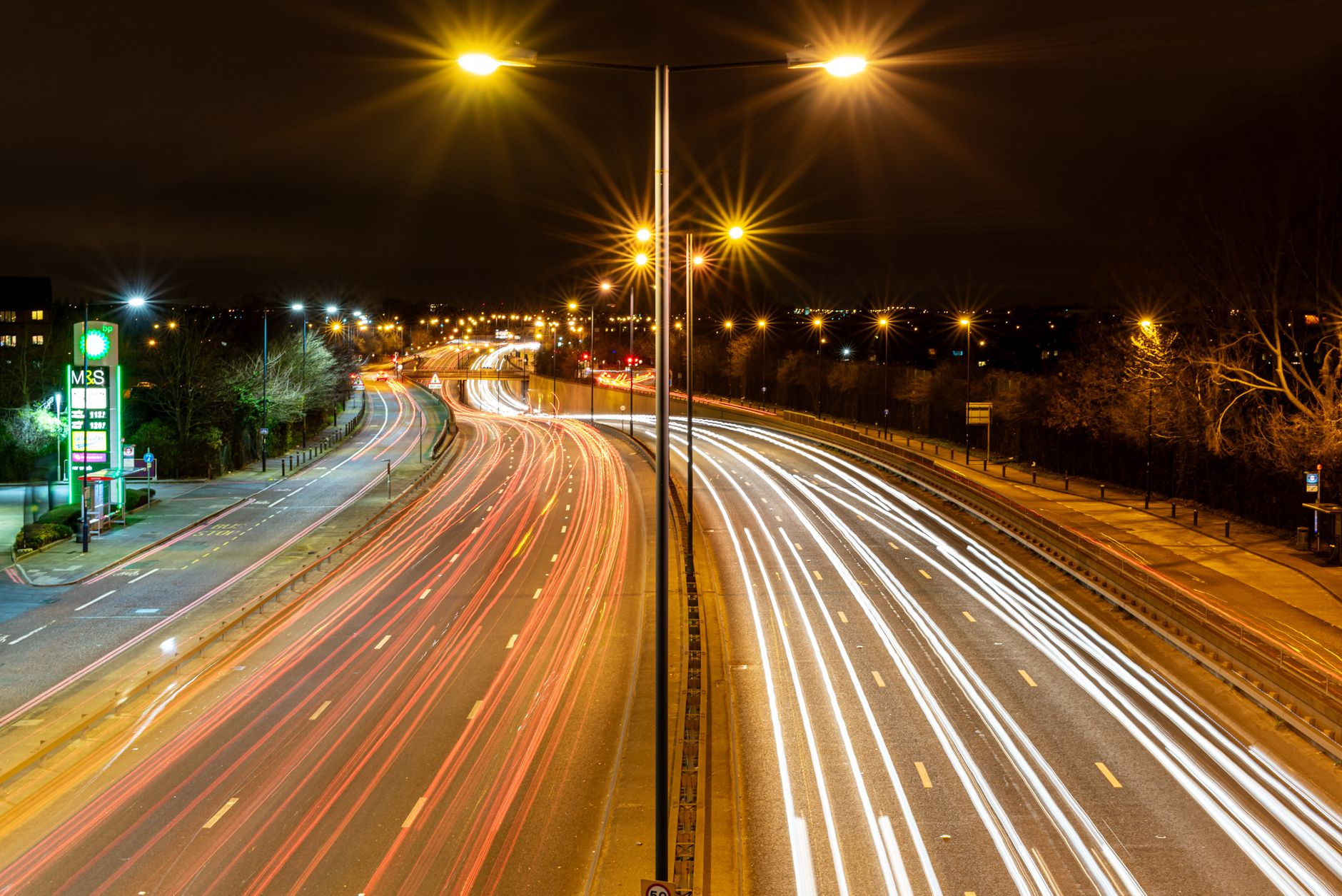
What actually are smart motorway cameras?
Smart motorways are stretches of the motorway network where the hard shoulder has been converted into a running lane, at least some of the time. The idea was to increase capacity without the cost and disruption of full widening. The M25, M6, M1, and M62 all have significant smart motorway sections, and Highways England (now operating as National Highways) has been rolling the system out for well over a decade.
The cameras that sit above these roads are doing several jobs at once. Average speed cameras calculate how long it takes your number plate to travel between two fixed points, then do simple maths to work out your speed. HADECS 3 cameras (the Highway Agency Digital Enforcement Camera System, third generation) are the dominant type, and they are not especially obvious. They are narrow, grey, and positioned on overhead gantries. Unlike the bright yellow Gatso boxes most drivers have been dodging mentally since the 1990s, HADECS 3 units do not flash. You will not know you have been caught. The cameras also monitor lane discipline, so straying into a lane closed by a red X signal is an offence that can be detected automatically.
The red X lane closure problem
This is where a lot of the anger sits. A red X displayed on an overhead gantry means that lane is closed, and driving in it is a legal offence under the Highway Code, carrying a fixed penalty of £100 and three points on your licence. National Highways’ own data shows enforcement of red X violations increased dramatically after cameras were upgraded across the M25 and M1 corridors from 2021 onwards.
The problem, as motoring groups including the RAC and IAM RoadSmart have pointed out repeatedly, is that red X signals sometimes appear and clear within seconds, gantry signs can be difficult to read in poor weather or heavy traffic, and the transition from a clear lane to a closed one is not always communicated with enough warning. Drivers report travelling at 70 mph with a vehicle in front when a signal changes overhead, and by the time they have processed it and moved, a camera has already logged the plate. The fine lands about three weeks later.
How average speed camera fines on smart motorways UK actually work
Average speed enforcement on smart motorways works on the same principle as the SPECS cameras you will have seen on roadworks sections for years. Your number plate is read at point A and again at point B. If the time elapsed is less than the minimum required to cover that distance at the posted limit, you have speeded. Simple. Except on smart motorways, the posted limit changes dynamically. Variable mandatory speed limits (VMSLs) can drop to 60, 50, or even 40 mph during congestion or incidents, and those limits are fully enforceable.
This is where drivers get caught out in significant numbers. Many people mentally treat a motorway as a 70 mph road and do not register that a gantry sign showing 50 is not advisory, it is legally binding. Smart motorway camera fines in the UK for speeding start at £100 and three points, but for higher excess speeds or repeat offences, magistrates can impose fines up to 150% of weekly income. A handful of cases have resulted in bans. The DVLA processes the registered keeper’s details and the ticket follows by post, which means there is typically a gap of two to four weeks between the offence and the letter arriving, long enough for most people to have entirely forgotten the journey.
Why motoring groups say this isn’t fair
The RAC’s annual Report on Motoring has repeatedly flagged smart motorways as a source of driver anxiety, with camera enforcement featuring prominently in complaints. The core arguments from motoring organisations cluster around a few specific points.
First, signage consistency is poor. A study by National Highways’ own internal review team found that gantry sign visibility standards are not met uniformly across the network, particularly in heavy rain or at night. Second, public education about variable mandatory speed limits has been inadequate. Surveys consistently find that a substantial proportion of UK drivers believe the lower limits on smart motorways are advisory rather than enforceable, which is simply wrong. Third, and most pointed, several sections of motorway where smart motorway cameras are installed were originally designated as having an emergency refuge area every 500 metres. Many do not meet that standard, and the original government commitment to install additional refuge areas has not been fully delivered on the M25 and M6 Expressway sections.
The argument runs that penalising drivers on infrastructure that does not fully meet its own safety specifications is, at minimum, difficult to defend. Safe Highways, a campaign group formed partly in response to fatalities on all-lane-running smart motorways, has made this case loudly since the early 2020s.
What the enforcement numbers actually look like
Hard figures on smart motorway camera fines specifically are tricky to isolate, because National Highways does not publish camera-by-camera enforcement data. What we do know is that overall fixed penalty notice volumes for motorway offences rose through 2023 and 2024, and anecdotal evidence from solicitors handling road traffic cases suggests red X and VMSL fines make up a growing share of their caseload. One Manchester-based road traffic law firm told trade press in late 2024 that enquiries about smart motorway fines had doubled compared with two years prior.
There is also an interesting geographical pattern. Stretches of the M25 between junctions 5 and 7 in Surrey, the M1 between junctions 28 and 35 in Nottinghamshire, and sections of the M6 near Coventry are consistently mentioned by drivers and legal professionals as particularly active enforcement zones. Whether that reflects camera density, traffic patterns, or signage clarity is hard to say without access to the raw data, but the concentration is worth knowing if you drive those roads regularly.
What you can do if you get a fine
If a notice arrives, the first thing to do is not ignore it. Failing to respond makes things worse, fast. If you genuinely believe the sign was not visible, there was an emergency, or the camera was malfunctioning, you can appeal via the Central Ticket Office listed on the notice. Photographs of the relevant gantry and dashcam footage, if you have it, are your best evidence. A growing number of UK drivers are fitting front-facing dashcams precisely because of situations like this, which I think is honestly one of the smarter small tech investments you can make for less than £60.
If the appeal fails and you want to contest the fine further, you can request a court hearing, at which point the fine becomes potentially larger if you lose, so the risk calculation matters. Most solicitors advising on smart motorway camera fines in the UK will tell you that clear dashcam evidence of an obscured or missing signal is the strongest card you have.
The debate about whether smart motorways are safe, fair, or even the right approach to capacity is not going away. The quirks of how the UK categorises and administers its infrastructure tend to create exactly these kinds of gaps between policy intention and lived experience. And just as regulatory crackdowns often catch ordinary people off guard, smart motorway enforcement has a habit of surprising drivers who thought they were doing nothing wrong. Know the rules, fit a dashcam, and read those overhead signs like your wallet depends on it. Because right now, it genuinely might.
Frequently Asked Questions
How much is a smart motorway camera fine in the UK?
The standard fixed penalty for speeding or ignoring a red X lane closure on a smart motorway is £100 and three penalty points. For higher speeds or if the case goes to court, fines can reach up to 150% of your weekly income, and a driving ban is possible for serious excess speeds.
Do smart motorway speed cameras always flash?
No. The HADECS 3 cameras used on most UK smart motorways do not produce a visible flash when they capture an image. This is one reason drivers are often unaware they have been caught until a notice arrives by post two to four weeks later.
Are variable speed limits on smart motorways legally enforceable?
Yes, fully. When a gantry sign displays a speed limit (for example 50 or 60 mph), it is a variable mandatory speed limit backed by law, not an advisory suggestion. Exceeding it is treated the same as exceeding a permanent speed limit and can result in an automatic fine.