

There is something quietly devastating about watching the last bank on a high street board up its windows. I grew up near a small Shropshire market town where the NatWest branch was basically the centre of civic life, the place you went for your first student account, your mortgage appointment, your awkward conversation about an overdraft. It closed in 2023. The Barclays went six months later. By the time 2026 rolled around, the nearest full-service branch was eleven miles away on a bus route that runs three times a day. For a twenty-something with a smartphone, mildly annoying. For an 80-year-old without a car, genuinely catastrophic.
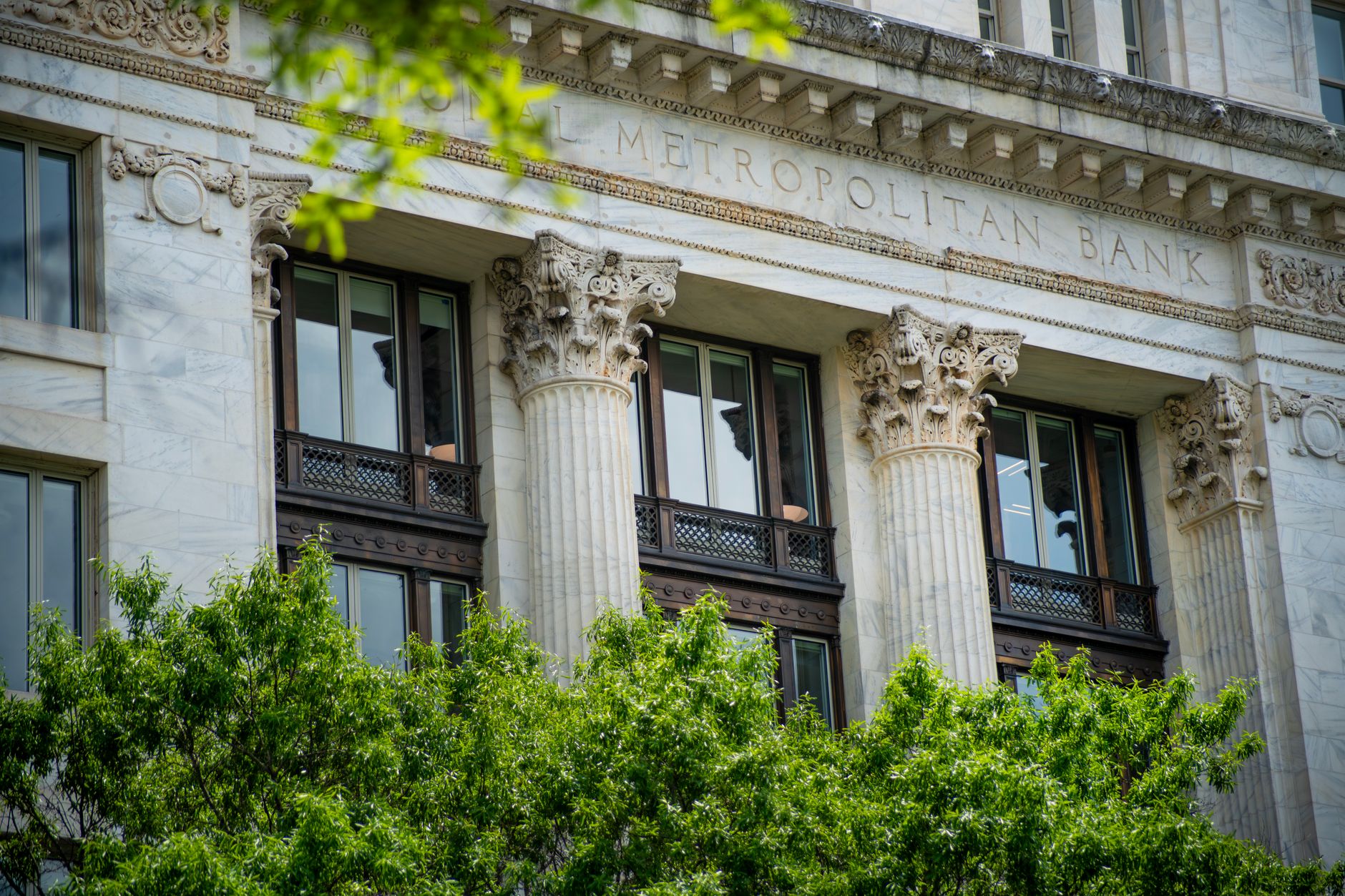
Bank branch closures UK 2026 is not a new story, but the pace has accelerated enough that it now touches communities that once felt insulated from the trend. According to Which?, more than 6,000 bank branches have closed in the UK since 2015, with the rate barely slowing. In 2025 and into 2026, NatWest, Lloyds, HSBC and Barclays all announced further closures, many of them in rural market towns and coastal communities where foot traffic never fully recovered from the pandemic. The banks’ own reasoning is consistent: fewer than 10% of transactions now happen at a branch counter, so why pay rent on a high street unit that most customers ignore?
The banking hub experiment, does it actually work?
The government and the banking industry’s answer to all this has been the banking hub. These are shared spaces, usually a former bank or retail unit on the high street, where different banks rotate staff on different days of the week. A Lloyds adviser might be in on Monday, a Barclays rep on Tuesday, and so on, while basic cash and counter services run every day. Cash Access UK, the organisation set up to deliver these hubs, had opened around 140 of them by early 2026, with more in the pipeline.
In principle, it sounds elegant. In practice, the feedback from residents in towns like Bala in Gwynedd or Alston in Cumbria is more mixed. The hubs do handle cash deposits and withdrawals reliably, and for many older residents that alone is significant. But for anything more complex, a mortgage query, a fraud dispute, a business account conversation, you still need an appointment, and that appointment might be weeks away with a representative who travels in from a regional office and has never met you before. The personal relationship that once made branch banking feel safe has not transferred.
The Post Office as a financial lifeline
The other piece of the puzzle is the Post Office, which has quietly become one of the most important financial institutions in rural Britain without most people realising it. Under the Banking Framework agreements with major UK banks, Post Office counters now handle personal and business cash withdrawals, deposits and balance enquiries for the vast majority of UK current accounts. There are around 11,500 Post Office branches across the country, including many in villages where no bank has ever operated.
I’d argue the Post Office workaround is better than its reputation suggests, for basic cash needs, at least. The problem is that Post Office branches are also under pressure. Sub-postmasters earn a tiny fee per transaction and many have been running at a loss for years. The Post Office scandal, which saw hundreds of sub-postmasters wrongly prosecuted due to the faulty Horizon IT system, left lasting damage to the network’s morale and staffing. Some rural post offices have closed precisely as the banking need for them has grown. The timing could hardly be worse.
Who is actually being left behind
The honest answer is: older residents, people without reliable internet access, small business owners who deal in cash, and anyone with a disability that makes travelling to the nearest town a significant undertaking. Age UK has repeatedly flagged that around 3.4 million older people in the UK are not online at all, and a further substantial number use the internet only occasionally and would struggle with mobile banking apps. For these people, the disappearance of a local branch is not an inconvenience, it is a removal of their ability to manage money independently.
Small businesses feel it acutely too. A market trader or a pub landlord dealing in cash still needs to physically deposit takings. Banking hubs help with that, but only if the hub is open at a useful time and within reasonable distance. A sole trader in a village ten miles from the nearest hub, without a car, is in a genuinely difficult position. And this is not a niche scenario, informal local economies in British market towns still run substantially on cash, particularly amongst older traders who have operated the same way for decades.
What the FCA and government are actually doing about it
The Financial Conduct Authority introduced rules in 2023 requiring banks to assess the impact of proposed branch closures on local communities before going ahead. They must consider whether alternative services are genuinely accessible, not just theoretically available. Banks that close without a proper assessment can be required to maintain services or contribute to alternatives. In practice, the rules have slowed some closures and prompted a handful of banks to reverse decisions, but they have not stopped the overall trend.
The FCA’s Financial Lives Survey data consistently shows that vulnerability is concentrated in exactly the communities losing branches fastest. There is something circular and frustrating about that. The regulator acknowledges the problem, the banks produce access assessments that tick boxes, and the closures proceed anyway. My reading of the situation is that the regulatory framework is well-intentioned but toothless enough that banks can satisfy it without genuinely solving anything.
There are some genuinely interesting experiments happening at the edges. A few credit unions have expanded into high street units vacated by the big banks, offering basic current accounts and savings products to communities the mainstream sector has walked away from. Some town councils are exploring shared financial hubs that combine banking services, benefits advice and debt counselling in a single accessible space. And digital-first banks like Monzo and Starling have grown enormously, but they serve the already-online population, not the people who most need a physical counter.
The broader picture for British high streets
Bank branch closures sit alongside a wider hollowing-out of British market towns that this blog has covered from several angles. The growing hunger for real-world community spaces makes a certain kind of sense when you consider that the anchor institutions, banks, post offices, pubs, local shops, have been disappearing for twenty years. A banking hub is better than nothing, and I genuinely think the Cash Access UK model has promise if it is properly funded and expanded. But it is also a managed retreat, not a solution.
What these towns actually need is not just access to cash. They need the confidence that comes from having a local institution that knows them, that can make a discretionary call on a loan application, that employs local people and pays local rates. The algorithm-driven, remote-serviced model that is replacing branch banking is efficient in aggregate and brutal in the specific. The 83-year-old in Ludlow or Hexham or Builth Wells is not a rounding error, but the spreadsheets tend to treat them that way.
The conversation about bank branch closures UK 2026 needs to be louder than it currently is. These are not just financial infrastructure decisions. They are choices about which communities we think deserve fully functioning civic life, and right now, market towns across Britain are getting a very clear answer.



Leave a Reply