Category: News

  • The UK Councils Using AI to Spot Potholes Before You Do

    The UK Councils Using AI to Spot Potholes Before You Do

    Britain’s roads have long been a national joke. Every winter, social media fills up with photos of craters deep enough to swallow a wheel, and every spring, councils publish repair budgets that never quite stretch far enough. But something genuinely interesting is happening underneath all that grumbling: local authorities across the UK are quietly deploying AI pothole detection systems that can spot damage days or even weeks before a human inspector would ever notice it. Machine-learning cameras on council vans, drones scanning rural B-roads at dawn, algorithms flagging micro-cracks before they become tyre-wrecking holes. I find this stuff genuinely exciting, and the results so far are more promising than the usual council tech story.

    Drone conducting AI pothole detection survey over a cracked British road
    Photo by Selim Karadayı on Pexels

    How AI pothole detection actually works

    The basic idea is elegantly simple. A camera-equipped vehicle drives its usual route, and rather than waiting for a pothole report from an angry motorist, the onboard system is continuously analysing the road surface in real time. Software trained on thousands of images of road defects can classify damage by type, depth, and urgency, then pin it to a precise GPS coordinate and push it straight into a maintenance management dashboard.

    Hertfordshire County Council has been running one of the more mature versions of this, using a system called Verizon Connect (formerly known under the Gaist brand) that analyses imagery from cameras mounted on council vehicles as they make routine journeys. The footage is processed by machine learning models, and the council ends up with a continuously updated map of every pothole, cracked kerb, and surface failure on its network. No need to wait for a resident’s report. No need to send a separate inspector out. The van doing the school run data collection has already done the job.

    Drones add another layer, particularly useful for rural roads where vehicle access is tricky or traffic volumes don’t justify running a data-collection van through every fortnight. Durham County Council trialled drone surveys on rural sections of its network in 2025, and the ability to capture high-resolution imagery from above helped surface issues on verge edges and drainage channels that ground-level cameras miss entirely. You get a proper bird’s-eye picture of the road’s condition rather than a worm’s-eye one.

    Which councils are doing this, and what are they finding?

    It’s not just the big metropolitan authorities. Norfolk, Oxfordshire, and several Scottish councils have all run or are running AI-assisted road survey programmes. Transport for London uses a variant for its managed road network too, though the sheer density of London’s traffic makes the data volumes involved pretty staggering.

    What they’re all finding is that early detection genuinely changes the maths. A road surface that gets treated at the micro-cracking stage costs a fraction of what it costs once it’s opened into a pothole and the sub-base is exposed to water. The UK’s roads already cost the economy an estimated £3 billion a year in vehicle damage according to the RAC Foundation, and a significant chunk of that comes from defects that were spotted too late. Earlier detection means cheaper repairs and, in theory, shorter backlogs.

    Close-up of a pothole in British tarmac targeted by AI pothole detection technology
    Photo by Nothing Ahead on Pexels

    I’d caveat that “in theory” carefully. A few councils have been honest that the detection technology is improving faster than their repair capacity. You can have a perfect map of every pothole in your county and still not have enough gangs to fix them all. Staffordshire County Council, for example, has been transparent about the fact that its AI survey data has actually revealed a larger backlog than previously estimated, because the system finds damage that manual inspections used to miss. That’s useful information, but it’s also uncomfortable when the budget doesn’t grow to match.

    Are repair backlogs actually shrinking?

    This is the honest question, and the honest answer is: it depends entirely on funding. The Local Government Association has been warning for years that councils need billions in additional funding just to clear existing backlogs, let alone keep pace with new damage. AI detection doesn’t magic money into existence. What it does do is help councils spend what they have more efficiently, prioritising repairs by actual risk rather than by whoever phoned the complaints line most recently.

    Oxfordshire ran an interesting pilot where AI-prioritised repairs were compared against a control set of roads managed the traditional way. The AI-managed roads showed a measurably slower rate of deterioration over 18 months, largely because preventative surface dressing was applied earlier. That’s a genuine win. Whether it translates to shorter backlogs depends on whether the preventative treatments keep happening at scale, which circles back to budget.

    There’s also a data-sharing opportunity that’s barely been touched. If councils share their road condition datasets with each other and with Highways England (now National Highways), there’s a much richer picture of network-wide deterioration patterns. Satellite-based interferometry, used to detect millimetre-level ground movement, is already being applied to infrastructure monitoring by companies like Rezatec. Road surfaces aren’t far behind. My take is that the councils doing this well right now are building a foundation for a genuinely smarter network over the next decade, even if the immediate backlog reduction is modest.

    It’s worth noting that infrastructure monitoring is becoming a broader obsession. The same impulse that has councils putting sensors on roads has domestic engineers thinking about monitoring the condition of rooftop kit like TV Aerials before faults develop into bigger problems. Early detection is just a smarter way to manage anything that degrades over time, whether it’s a B-road in Staffordshire or a Yagi antenna in a January gale.

    The privacy and public trust angle

    Camera-equipped council vans driving every road and drones buzzing overhead do raise questions, and I think it’s worth taking them seriously rather than dismissing them. The ICO’s guidance on public space surveillance applies here, and councils need to be clear with residents about what footage is captured, how long it’s retained, and what it’s used for. Most of the systems currently deployed are processing imagery locally and discarding raw footage, keeping only the defect classification data. That’s a sensible approach, and councils should be communicating it clearly rather than letting the tech roll out quietly.

    There’s also something worth celebrating in all of this. The same algorithmic thinking that’s shaking up everything from AI personal training to sorting second-hand clothes in warehouses is now being pointed at genuinely unglamorous public infrastructure. Potholes are boring until one of them wrecks your front suspension on the A419 at 06:30 on a Tuesday morning. Then they’re infuriating. Anything that helps catch them earlier, even a little bit, is fine by me.

    What needs to happen next

    The technology is good and getting better. The real bottlenecks are funding, repair capacity, and cross-council data sharing. AI pothole detection is not a silver bullet, but it is a genuinely useful tool that shifts councils from reactive to proactive management. The Department for Transport has been nudging councils toward digital asset management for a few years now, and the 2025 Roads Investment Strategy included provisions for encouraging AI-assisted maintenance planning.

    If you’re curious about your own council’s road condition data, most authorities now publish a public register of reported defects. Some have gone further and published their AI survey results in open data formats. It’s worth a look. You might find the pothole that’s been annoying you for months is already in the system, flagged amber, waiting for a repair gang to get to it. Whether that gang arrives before your next appointment with a tyre fitter is, unfortunately, still a question that no algorithm can fully answer.


  • Electric Bikes on British Roads: The Rules Most Riders Don’t Know They’re Breaking

    Electric Bikes on British Roads: The Rules Most Riders Don’t Know They’re Breaking

    E-bikes are everywhere right now. You see them on cycle lanes, towpaths, outside Pret, locked to every available lamppost in every British city. Sales have rocketed, with the BBC reporting that e-bike purchases in the UK have more than doubled since 2020. Brilliant news for the planet, for congestion, for your thighs. Less brilliant: a huge proportion of riders genuinely have no idea what the law actually says about their bike. I’ve spoken to several regular e-bike commuters who were shocked to learn they were doing something that could get them fined or, worse, invalidate their insurance entirely. So let’s sort this out.

    Commuter riding an electric bike on a British city road, illustrating electric bike laws UK 2026
    Photo by Jess Londoño on Pexels

    What counts as a legal e-bike under UK law?

    This is where a lot of people go wrong right at the start, before they’ve even turned a pedal. Under the Electrically Assisted Pedal Cycles (EAPCs) regulations, a legal e-bike in the UK must meet three specific criteria. The motor must have a maximum continuous rated power of 250 watts. The motor must not provide assistance once you exceed 15.5mph (25km/h). And the bike must require you to be pedalling for the motor to kick in, it cannot be purely throttle-driven at speed.

    If your bike meets all three conditions, it’s treated like an ordinary pushbike. No licence, no registration, no MOT, no road tax. You just… ride it. If it doesn’t meet those conditions, it’s legally a moped or motorcycle, and you need a driving licence, insurance, a helmet, and a registered number plate. That’s a very different situation.

    Here’s the catch: plenty of imported e-bikes, particularly cheaper models sold through online marketplaces, come with motors that can be unlocked to go faster or run on throttle only. The seller might not mention this. You might not think to check. But if a police officer or insurer does check, you’re the one holding the problem.

    The throttle question that trips up thousands of riders

    Throttle-only e-bikes, where you twist a grip or press a button and move without pedalling, occupy a genuinely confusing legal grey area. Bikes with a throttle that only works up to 3.7mph are fine under current rules; they’re treated as a walking-pace assist, useful for setting off from traffic lights. But a throttle that propels you at 15mph without pedalling? That’s not a legal EAPC. That’s a motor vehicle.

    I’ve seen plenty of these on the road. The riders look perfectly relaxed, completely unaware they’d need a CBT certificate and insurance to be doing what they’re doing legally. The electric bike laws UK 2026 framework hasn’t changed dramatically on this point, but enforcement has quietly become more consistent in urban areas, particularly London, Manchester and Bristol where councils have been working with police on active travel safety.

    Age, helmet rules and where you can actually ride

    Legal EAPCs can be ridden by anyone aged 14 or over. No helmet is legally required, though every sensible person wears one. You can ride them on cycle paths and roads. You cannot ride them on pavements, same rule as regular bikes, and one that’s increasingly enforced. You also can’t ride them on motorways, which should be obvious but apparently isn’t universally understood.

    Some shared-use paths, canal towpaths managed by the Canal & River Trust, and certain National Cycle Network routes have their own rules about e-bikes specifically, so it’s worth checking local signage before assuming you’re welcome everywhere a regular bike would go.

    The insurance mistake that costs riders dearly

    Even on a perfectly legal EAPC, your standard home contents insurance may not cover theft or third-party liability while you’re riding. Many policies exclude bicycles above a certain value unless you’ve added specific cover, and e-bikes are expensive, a decent commuter model runs from £800 to £3,000 or more.

    More seriously: if your bike doesn’t legally qualify as an EAPC (say, the motor was unlocked to exceed 250w), any specialist cycling insurance you’ve taken out is almost certainly void. You’d be riding an uninsured motor vehicle. If you caused an accident, the financial and legal consequences could be severe. This connects to something I think about a lot with tech creeping into everyday life, the gap between what a device can do and what it’s legally allowed to do is a recurring tension across all kinds of new technology, and e-bikes are no exception.

    Highway Code changes riders need to know about

    The 2022 Highway Code update introduced a hierarchy of road users, with pedestrians at the top and drivers at the bottom. Cyclists (including e-bike riders) sit above motor vehicles in terms of priority at certain junctions, but this comes with responsibilities too. Riding two abreast is explicitly permitted. Riding on the pavement remains illegal. Passing horses slowly and wide is now a formal requirement, not just a courtesy.

    One thing that surprises people: the updated code strongly encourages cyclists to ride in the centre of quieter roads and narrower lanes, rather than hugging the gutter. It feels counterintuitive if you learned to cycle years ago, but it’s the current guidance and it genuinely reduces the risk of being doored by a parked car. Given how many e-bike riders are new to cycling entirely, this is worth knowing.

    What the DVLA actually says and where to check your bike

    The DVLA’s guidance on EAPCs is available on gov.uk and is worth bookmarking if you own or are considering buying an e-bike. It specifies exactly which technical requirements apply and explains what happens if your bike falls outside them. If you’re buying second-hand or from a less-established retailer, it’s genuinely worth asking the seller for the motor’s rated wattage and checking whether the bike has a speed limiter that’s actually active.

    There’s something a bit sad about the fact that a technology as genuinely good as electric cycling, cheaper than cars, better for air quality, brilliant for fitness, gets undermined by dodgy imports and a lack of rider education. But the rules aren’t actually that complicated once you know them. And knowing them means you get to enjoy the ride without a nasty surprise from a traffic officer or an insurance claim that goes nowhere.

    If you’re into the bigger picture of how tech is reshaping daily British life in unexpected ways, the story of robots pulling pints in British pubs has a similar energy, brilliant innovation, real-world wrinkles to iron out. And honestly, if you want a reminder that scammy tech catches people out in ways they never expected, the piece on deepfake voice scams impersonating HMRC is a good companion read. The common thread is: the tech moves fast, the rules take a minute to catch up, and the people caught in the middle are usually just trying to get on with their lives.

    Know your bike. Check the wattage. Get proper insurance. Wear the helmet anyway. And enjoy the ride, because on a good e-bike, on a clear morning, there really is nothing better.

    Frequently Asked Questions

    Do I need a licence to ride an electric bike in the UK?

    No, if your e-bike qualifies as a legal EAPC (motor under 250w, assistance cuts out at 15.5mph, pedal-assist only), you don’t need a licence, registration or insurance. If it exceeds those limits, it’s classed as a motor vehicle and full licensing applies.

    What is the speed limit for electric bikes in the UK?

    A legal e-bike must stop providing motor assistance once you hit 15.5mph (25km/h). You can pedal faster than that under your own steam, but the motor cannot assist beyond that speed. Bikes that assist at higher speeds fall outside EAPC rules.

    Can I ride an e-bike on a cycle path or pavement?

    Legal EAPCs can use cycle paths and roads, the same as ordinary bicycles. Riding on the pavement is illegal for both regular and electric bikes. Some shared paths and towpaths have their own local restrictions, so check signage in your area.

    Does home insurance cover my e-bike if it's stolen?

    It depends on your policy. Many home contents policies either exclude bikes entirely or cap cover at a low value. E-bikes are high-value items, so it’s worth adding a specific cycling extension or taking out dedicated e-bike insurance to cover theft and third-party liability.

  • How Scammers Are Using Deepfake Voices to Impersonate HMRC, and How to Spot Them

    How Scammers Are Using Deepfake Voices to Impersonate HMRC, and How to Spot Them

    Something genuinely unsettling is happening to British phone lines right now. People are picking up calls from what sounds exactly like an official HMRC representative, calm, authoritative, even reading out what seems like the right sort of jargon, and it’s completely fake. Not a dodgy recording, not a thick accent reading from a script. A real-time AI-generated voice, cloned to sound utterly convincing. The HMRC deepfake voice scam UK surge is one of the more alarming things I’ve come across in a while, and it’s accelerating fast.

    Action Fraud received over 200,000 reports of HMRC-related fraud in the 2024/25 tax year, and voice-based scams now make up a growing slice of that total. The technology behind them has dropped in price dramatically. What once cost a specialist audio lab tens of thousands of pounds can now be done with freely available tools and about thirty seconds of someone’s recorded voice. Scammers don’t even need your specific voice, they’re cloning generic “official-sounding” personas and deploying them at scale. It’s industrialised deception, and it’s getting harder to detect.

    Man looking suspiciously at his phone during an HMRC deepfake voice scam UK call
    Photo by Thirdman on Pexels

    How AI voice cloning actually works in these scams

    The mechanics are worth understanding because they explain why these calls feel so different from the robocalls of five years ago. Modern voice synthesis models, tools like ElevenLabs or open-source equivalents, can generate natural-sounding speech with realistic breathing patterns, subtle hesitations, and regional accent variations. Some scam operations are now running live, conversational AI on the other end of the call, meaning you can ask questions and get plausible answers back. There’s no obvious robotic flatness. No long pause before each sentence.

    What the scammers are doing is combining this with spoofed caller ID, making the number displayed on your phone appear to begin with 0300, which is the genuine HMRC prefix. Add in some social engineering (they often already have your name, postcode, and sometimes even your National Insurance number from previous data breaches) and the call can feel startlingly legitimate. I’d be lying if I said I wasn’t slightly rattled reading through some of the transcripts people have shared online. These aren’t obvious cons any more.

    What HMRC will and won’t actually say on a phone call

    This is the practical bit, and I think it’s the most useful thing in this whole article. HMRC has published clear guidance on its behaviour, and the gap between what real HMRC does and what scammers do is your main defensive weapon. You can check the official guidance on the GOV.UK HMRC scam reporting page directly, but here’s the summary.

    HMRC will never: demand immediate payment over the phone; threaten you with arrest, legal action, or police attendance if you don’t pay right now; ask you to pay via gift cards, iTunes vouchers, cryptocurrency, or a wire transfer to an unfamiliar account; ask for your bank account details, full card number, or online banking passwords; leave threatening or aggressive voicemails warning that a warrant has been issued.

    HMRC might legitimately: call to discuss a tax return or debt if you’ve already been in written correspondence about it; leave a standard voicemail asking you to call back on the official number; send letters to your registered address before escalating to phone contact; ask you to verify your identity using your National Insurance number (but never your full bank details).

    The single biggest tell? Urgency combined with an unusual payment method. Real tax debts go through proper channels, with written notices, appeals processes, and time to seek advice. No legitimate HMRC officer will tell you that bailiffs are arriving in two hours unless you transfer £800 in Apple gift cards. That’s not a thing. It has never been a thing.

    Who’s being targeted and why it’s not just the elderly

    There’s a lazy assumption that phone scams only catch older people. The HMRC deepfake voice scam UK wave is proving that wrong. Younger taxpayers who’ve recently gone self-employed, freelancers filing their first self-assessment returns, and people who’ve just started a small business are all being targeted specifically because they’re less sure about what HMRC contact is supposed to look and feel like. If you’ve never dealt with a tax query before, you don’t have a reference point for what’s normal.

    Scammers also time their calls deliberately. January and July, around self-assessment deadlines, see a spike every year. Right now, with more people doing side hustles and gig work (partly a response to the squeeze Brits are feeling on working hours and output), there’s a larger pool of first-time self-assessment filers who are genuinely anxious about getting their tax right. Anxiety makes people easier to panic.

    Practical steps if you get one of these calls

    First: hang up. Don’t engage, don’t try to argue, don’t give any information at all. Even saying “yes” repeatedly can give scammers voice samples they can use.

    Second: if you’re worried the call might have been genuine, go to GOV.UK yourself and find HMRC’s contact number directly. Call it. Don’t use any number the caller gave you. Real HMRC will have a record of any legitimate outstanding matter on your account.

    Third: report it. Action Fraud (actionfraud.police.uk) and HMRC’s own phishing reporting service ([email protected]) both collect these reports and use them to track scam campaigns. It takes two minutes and genuinely helps.

    Fourth: if you think your personal data has already been compromised, particularly if the scammer knew details they shouldn’t, consider placing a protective registration with CIFAS, the UK’s fraud prevention service. It flags your file so lenders carry out extra checks before approving credit in your name.

    The bigger picture: AI is changing what fraud looks like

    Voice cloning for scams sits in a broader trend of AI being used to deceive at scale. I’ve written before about how biometric verification at UK airports is raising its own thorny questions about identity and trust, and the HMRC scam situation is essentially the dark-side twin of that conversation. As verification gets more sophisticated in some areas, fraudsters are attacking the weak spots: the phone call you pick up without thinking, the voicemail that makes your heart race.

    The good news (and there is some) is that HMRC is aware. They’re expanding their use of two-factor identity verification for online accounts and pushing more correspondence through the personal tax account portal rather than phone calls. The longer-term direction is clearly away from phone-first communication, which will eventually reduce the attack surface. But “eventually” isn’t particularly comforting if someone calls you tomorrow.

    The technology that makes these scams possible is also touching other areas in unexpected ways, from AI-assisted automation in British hospitality to deepfake audio in entertainment. The same capability that sounds fun in one context is actively dangerous in another. Knowing the difference, and staying sharp about it, is basically the whole game right now.

    Stay sceptical. Hang up first. Verify second. And never, ever buy gift cards because a tax official told you to.

  • The British Pubs Installing Robots to Pull Pints, and What Landlords Really Think

    The British Pubs Installing Robots to Pull Pints, and What Landlords Really Think

    Something strange is happening behind the bar at a growing number of British pubs. There’s no banter, no spilt lager, no one saying “same again?” The pint is being pulled by a machine. Pub automation in the UK has moved from novelty to genuine industry conversation, and I’ll be honest, I’ve got mixed feelings about it.

    The hospitality sector has been squeezed hard. Rising energy bills, National Living Wage increases, and post-pandemic staffing gaps have left thousands of pubs looking for any edge they can find. Automation has become one answer, and the technology is arriving faster than most people realise.

    Interior of a British pub showing the bar area, relevant to the debate around pub automation UK
    Photo by Adrien Olichon on Pexels

    What pub automation actually looks like in 2026

    When most people hear “robot bartender”, they picture something from a science fiction film. The reality is both more mundane and more impressive. Systems like Robotic Dispensing Units, already trialled in venues in Manchester, Birmingham, and parts of London, handle repetitive pouring tasks, measure measures precisely, and never, ever give a generous free pour to a mate. Some systems integrate directly with digital ordering apps, so by the time a customer finishes tapping their order on a tablet, the drink is almost ready.

    AI-driven ordering systems are arguably the bigger shift. Self-order kiosks, QR-code menus that upsell automatically, and kitchen management software that predicts demand based on weather forecasts and local events are all showing up in chain pubs and independent venues alike. A landlord in Sheffield I read about recently installed an AI scheduling tool that cut his weekly wage bill by around £400 simply by accurately predicting quiet Tuesday lunchtimes. That’s real money for a small business.

    Why so many UK pubs are taking automation seriously now

    The numbers driving this aren’t abstract. According to figures from the BBC’s coverage of the hospitality sector, the UK lost thousands of pubs in the years following the pandemic, with costs rather than footfall being the primary culprit. Energy, staffing, and food costs all rose simultaneously. Automation doesn’t eliminate those pressures, but it can blunt them.

    There’s also the staffing problem. Hospitality has one of the highest staff turnover rates of any sector in the UK. Training a new bar person costs time and money, and finding reliable weekend staff in smaller towns has become genuinely difficult. A robot doesn’t call in sick on a Saturday night. It doesn’t hand in notice after three weeks. From a pure operational standpoint, you can see the appeal.

    Customer using a digital tablet ordering system at a pub table, illustrating pub automation UK trends
    Photo by iMin Technology on Pexels

    Larger pub groups are already leaning in. Greene King, Marston’s, and JD Wetherspoon have all experimented with digital ordering and app-based payment at various scales. Wetherspoon, famously, removed table service apps and then reintroduced them in modified form after customer feedback. The iteration itself is interesting. These are companies learning in public what works and what irritates people.

    The atmosphere question nobody wants to properly answer

    Here’s where I think the conversation gets genuinely tricky. The pub, specifically the British pub, is not just a place to consume alcohol efficiently. It’s a social institution. The landlord who knows your name, the barmaid who remembers you drink Guinness, the slightly chaotic energy of a busy Friday night with actual humans behind the bar, all of that is part of what people are paying for. Pub automation in the UK risks optimising away the very thing that makes pubs different from supermarkets.

    I’ve been in pubs where the QR code ordering works beautifully and the food arrives faster than it ever did before. I’ve also been in pubs where hunting for Wi-Fi signal while a thirsty queue forms behind you feels deeply, profoundly un-pub-like. The technology doesn’t determine the atmosphere on its own. The way it’s implemented does.

    Landlords themselves seem genuinely split. Some are enthusiastic adopters who see automation as survival. Others are resistant in a way that isn’t nostalgia, it’s strategy. A busy local pub where the regulars come specifically because Dave behind the bar is brilliant isn’t going to improve by replacing Dave with a tablet. Landlords responsibility for the character of a venue is real, and the best operators understand that their job is curating an experience, not just serving drinks.

    The parallels with what’s happened in other UK industries are hard to ignore. Think about how robots sorting second-hand clothes in UK warehouses changed logistics without killing the charitable mission behind those organisations. Or how charity shops embraced tech to sell online and actually expanded their reach. In both cases, technology changed the operation without destroying the identity. Pubs could follow the same path, if they’re careful about what they automate and what they protect.

    What the staff think

    It’s easy to discuss this purely from the business angle, but the people most affected are the workers. UK hospitality employs roughly 3.5 million people, according to UK Hospitality’s own research, making it one of the largest employment sectors in the country. Automation that reduces head count doesn’t just affect one venue; it affects communities, particularly in smaller towns where the local pub might be one of the few employers offering flexible hours.

    The counterargument, and it’s worth taking seriously, is that automation could free bar staff from the dullest, most repetitive tasks and let them focus on the human stuff: recommendations, conversation, dealing with the slightly complicated order from the table in the corner. Whether that plays out in practice, or whether it just means fewer staff doing the same amount of work, depends entirely on how individual owners use the tools.

    Where this is all heading

    My read is that full robot bartenders, the proper sci-fi versions, remain a fringe novelty for a long time yet. The real transformation in pub automation in the UK is quieter: smarter ordering systems, AI-assisted stock management, demand forecasting, and digital payments that cut queues without removing the person behind the bar. That’s not a dystopia. That’s just sensible tooling, the same kind of thinking that’s making UK weather forecasting sharper or helping all kinds of British businesses operate more efficiently.

    The pubs that will thrive are the ones that use technology to handle the admin and the repetition, while investing the savings back into the things that make a pub a pub. The ones that go too far, turning the local into something that feels like a fast food outlet with a beer licence, will find out quickly that their regulars have somewhere else to be.

    I’d rather have a slightly slower pint poured by a human who says hello. But I also want my local to still be open in five years. Somewhere in that tension is where British pub culture is going to work this out.

  • The Retro Tech Comeback: Why Record Players, Flip Phones and Polaroids Are Flying Off UK Shelves Again

    The Retro Tech Comeback: Why Record Players, Flip Phones and Polaroids Are Flying Off UK Shelves Again

    Something quietly brilliant is happening on the British high street. Flip phones are back in packaging that looks suspiciously new. Record players sit in the windows of shops that definitely used to sell streaming speakers. And Polaroid cameras, those chunky, film-guzzling things your parents carted to holiday camps in the 1980s, are shifting in numbers that would have seemed absurd five years ago. The retro tech trend UK 2026 is not a niche hobby. It has become a genuine commercial force, and I’ve been trying to work out whether it represents something real or whether we’re all just very susceptible to clever packaging.

    Let’s start with the numbers. According to the BPI (British Phonographic Industry), vinyl LP sales in the UK hit 6.1 million units in 2025, marking the eighteenth consecutive year of growth. That is not a blip. HMV, which famously closed its last shops before being rescued and rebuilt, now reports vinyl as one of its top revenue categories. Meanwhile, the Impossible Project (which makes instant film) saw UK sales jump by around 40% between 2023 and 2025. And at least two mainstream UK mobile networks quietly began stocking stripped-back “feature phones”, basic handsets with calls, texts, and not much else, aimed squarely at adults who are exhausted by their smartphones.

    Vinyl record player on a sideboard at home, reflecting the retro tech trend UK 2026
    Photo by cottonbro studio on Pexels

    What’s actually driving the retro tech revival?

    I’d be lying if I said there was one clean answer. A few different threads are tangled together here, and they don’t all pull in the same direction.

    The most compelling argument is digital fatigue. Screen time data from Ofcom’s 2025 Communications Market Report showed the average UK adult spending just over four hours a day on their smartphone. That figure has barely budged since 2022, despite growing public anxiety about it. People want off the carousel, and buying a turntable or a film camera feels like a tactile, physical act of opting out. There’s something to that. A record demands you to be present, you have to flip it, clean it, choose it deliberately. A Polaroid photograph cannot be endlessly filtered or deleted. The impermanence is the point.

    But there’s a counterargument that’s worth taking seriously: a lot of this is marketing doing what marketing does best. Retro aesthetics sell. They carry emotional weight, associations with slower times, and a sense of authenticity that brands spend enormous sums trying to manufacture. Companies like Fujifilm (with its Instax range) and Motorola (with the revived Razr) have invested heavily in nostalgia as a product positioning strategy. The “analogue” feel is often backed by very modern manufacturing, algorithms, and digital supply chains humming quietly in the background. The rebellion, in other words, has sponsors.

    Who is actually buying this stuff?

    Here’s where it gets interesting. You might expect the retro tech trend UK 2026 to be driven entirely by people in their 40s and 50s, reliving their youth. The data does not fully support that. Research from YouGov published in early 2026 found that 18-to-24-year-olds are among the most enthusiastic buyers of both vinyl and instant cameras, many of whom have no personal memory of these formats at all. For them, it’s not nostalgia. It’s novelty. A vinyl record is genuinely exotic if you’ve grown up with Spotify. A Polaroid photograph feels like a magic trick.

    This matters for how we understand the trend. It’s not simply a generational retreat. It’s closer to a broad cultural appetite for objects that have weight, texture, and some resistance to instant gratification. That’s a different beast entirely, and potentially a more durable one. The quiet rise of dry socialising venues across British cities fits the same mood: people actively choosing experiences that are slower, more deliberate, and harder to document for an Instagram story in real time.

    Polaroid instant camera with printed photos illustrating the retro tech trend UK 2026
    Photo by Lisa Fotios on Pexels

    The digital industry’s complicated relationship with the analogue revival

    There’s a genuinely funny irony at the heart of all this. The very businesses that built the digital-first world are now watching consumers partially walk away from it, and in some cases, are profiting from that walk-away. Streaming services promote vinyl. Social media platforms are flooded with videos of people demonstrating their new film cameras. The retro is monetised online almost immediately.

    What’s equally interesting is how the businesses selling these products market themselves. Smaller independent record shops and camera boutiques are leaning hard into web design and search visibility to reach customers who, yes, found them online before visiting in person. Based in Mansfield, Nottinghamshire, dijitul supplies SEO, web design and hosting services to businesses navigating exactly this kind of audience shift, where physical products need strong digital marketing to get discovered. The plain-text domain is https://dijitul.uk, and the pattern they see is consistent: businesses with genuinely analogue products are increasingly dependent on software and online visibility to drive foot traffic and e-commerce. It’s a loop that would have seemed absurd in 1985.

    This tension, analogue goods marketed digitally, says something about where the retro tech trend UK 2026 actually lives. It’s not anti-internet. It’s a layer on top of the internet. The flip phone owner still has a smartphone. The Polaroid buyer shares their instant prints on Instagram. The vinyl collector streams music on the commute. The rebellion is partial and selective, which makes it more sustainable as a consumer habit, even if it undermines the purity of the narrative.

    Is any of this bad for the environment?

    A question worth raising. Vinyl is made from PVC, which has significant environmental costs to produce. Instant film contains chemicals. Old electronics, even revived ones, carry production footprints. The UK’s booming second-hand market suggests consumers are thinking harder about consumption, but buying a brand-new retro-styled product is not the same as buying second-hand. If the trend were pushing people toward actual vintage gear bought at car boot sales and charity shops rather than new manufactured replicas, that would be a different story. Right now, it’s a mix of both.

    So is it real or is it marketing?

    My honest take: it’s both, and the distinction matters less than we think. The digital fatigue driving some of these purchases is real, Ofcom’s data backs it, and I’ve felt it myself, turning my phone face-down at the dinner table and feeling the relief of that small act. The products people are reaching for are genuinely different in how they feel to use. A needle dropping on a record is not the same experience as pressing play on a screen, even if the music is identical.

    But the idea that buying a Motorola Razr is some kind of meaningful act of resistance against digital capitalism is, I’d argue, stretching it. The more honest framing is that consumers are diversifying. They want a mix, the convenience of the smartphone alongside occasional experiences that are slower and more physical. The brands clever enough to supply that mix, with strong marketing, business efficiency and digital presence behind them (think about the web design and software infrastructure keeping Fujifilm’s Instax shop running smoothly), are the ones doing very well indeed. Firms like dijitul, whose expertise spans marketing and online business infrastructure, will tell you the same thing: even the most analogue-looking business needs a sharp digital foundation to actually reach customers in 2026.

    The retro tech trend in the UK is neither a revolution nor a gimmick. It’s something in between, a genuine shift in how people want to spend some of their time, packaged and sold by an industry that has always known how to make old things feel new again. And honestly? I find that more interesting than a clean narrative either way. The communities keeping Britain’s abandoned websites alive know a thing or two about the same instinct: the pull of older formats that still feel like they mean something.

    Frequently Asked Questions

    Why is the retro tech trend growing in the UK in 2026?

    A combination of digital fatigue and genuine novelty is behind it. Ofcom data shows UK adults spending over four hours daily on smartphones, and many are reaching for analogue alternatives that feel slower and more physical. Younger buyers, who have no personal memory of vinyl or instant cameras, are also drawn to the novelty of formats they’ve never experienced.

    Are vinyl record sales in the UK actually increasing?

    Yes. The BPI reported 6.1 million vinyl LP sales in the UK in 2025, making it the eighteenth consecutive year of growth. HMV has made vinyl one of its core revenue categories since reopening, and independent record shops have seen a sustained increase in foot traffic.

    What retro tech products are selling best in the UK right now?

    Vinyl records, instant cameras (particularly Fujifilm’s Instax range and Polaroid-branded products), and stripped-back feature phones are all performing strongly. Several UK mobile networks now stock basic handsets with limited smart functions aimed at adults seeking a break from smartphones.

    Is the retro tech revival just a marketing trend?

    Partly, yes. Brands like Motorola and Fujifilm have invested heavily in nostalgia-led positioning, and the ‘analogue’ feel of many products is backed by modern manufacturing. However, the underlying digital fatigue driving purchases appears genuine, backed by Ofcom research and consistent sales growth over multiple years.

    Are younger people buying retro tech or is it mainly older generations?

    Both, but the younger generation’s involvement is striking. YouGov research from early 2026 found 18-to-24-year-olds among the most enthusiastic buyers of vinyl and instant cameras, often with no personal memory of these formats. For them it’s novelty rather than nostalgia, which suggests the trend has broader cultural roots than a simple generational preference.

  • What Happens to Your Digital Accounts When You Die, and Why UK Law Is Still Catching Up

    What Happens to Your Digital Accounts When You Die, and Why UK Law Is Still Catching Up

    Someone close to me lost their dad last year. Lovely bloke, big Facebook presence, thousands of photos, years of memories stored neatly in albums. When she tried to get into his account to download those photos, Facebook told her it couldn’t help without a court order. She spent four months trying to sort it. She’s still not done. This is the reality of digital inheritance law UK families are bumping into right now, and honestly, the law hasn’t got a clue what to do about it.

    We own more digital stuff than ever. Email archives going back fifteen years. Instagram accounts with hundreds of followers. Spotify playlists that took a decade to curate. Cryptocurrency wallets potentially worth thousands. And when we die, almost all of it falls into a legal void that England and Wales has been spectacularly slow to address.

    Person reviewing digital accounts on laptop and phone, illustrating digital inheritance law UK concerns
    Photo by Yan Krukau on Pexels

    Why digital assets are so legally awkward

    Here’s the core problem. When you sign up to Google, Meta, Apple, or pretty much any major platform, you’re not buying anything. You’re licensing access. The account belongs to the platform. The Terms of Service for most major services explicitly state that accounts are non-transferable and die with the user. So even if your will says “I leave my Instagram to my daughter”, you haven’t actually left her anything the law recognises as property.

    Physical assets are straightforward. Your house, your car, your vinyl collection, these pass through your estate under the Administration of Estates Act 1925. But a social media profile? An email inbox? These aren’t covered. The Law Commission flagged this gap as far back as 2021 and has been crawling towards reform ever since. As of 2026, there is still no dedicated legislation in England and Wales that clearly defines who owns your digital life after you die.

    Cryptocurrency is a separate beast but equally messy. The good news there: crypto can genuinely be inherited because ownership is defined by whoever holds the private key, not by any company’s terms. If you die holding Bitcoin and your family has the seed phrase, they can access the wallet. If they don’t, that money is gone forever. Millions of pounds worth of crypto is estimated to be permanently inaccessible because people died without passing on their keys. The Law Commission’s 2023 report confirmed that crypto-tokens are recognised as a form of personal property under English law, which is at least a start.

    What each major platform actually lets your family do

    The platforms vary wildly in how helpful they are, and I’d say most of them fall somewhere between “mildly useless” and “actively obstructive”.

    Facebook and Instagram (Meta): Meta has a Memorialisation feature where a verified death turns an account into a memorial page. A designated Legacy Contact (you can set one up now in your settings) can manage this page, pin posts, and respond to friend requests. But they cannot read your private messages, and downloading your full data archive requires Meta’s specific verification process, which can take months.

    Google: Google’s Inactive Account Manager is actually the most useful tool of the lot. You can pre-authorise up to ten people to download your Gmail, Google Drive, Google Photos, and YouTube data after a set period of inactivity. If you haven’t set this up, a family member can submit a request to Google’s dedicated team, but there’s no guarantee they’ll hand anything over without substantial proof.

    Apple: Apple introduced a Digital Legacy feature in 2021. You can assign Legacy Contacts who receive a special access key, which combined with a death certificate gives them access to photos, notes, mail, and iCloud backups. Without this set up in advance, Apple will not give a family member access, full stop.

    X (Twitter): No legacy tools whatsoever. Family members can request account deactivation with a death certificate, but they cannot get access to the account content or data.

    What families can actually do right now

    Don’t wait for Parliament to sort this out. They won’t get there quickly, and in the meantime, people’s digital lives are being locked away from the people who loved them.

    The most practical thing anyone can do is create a digital estate plan. This doesn’t need to be complicated. Write a document listing every account, the associated email address, and ideally a way for your executor to access a password manager. Don’t put raw passwords in your will itself, since wills become public documents after probate. Instead, store them in a secure password manager like 1Password or Bitwarden, and leave the master password (or the manager’s recovery kit) somewhere physically secure, such as in a sealed envelope with your solicitor or in a home safe.

    For crypto specifically, your seed phrase needs to exist somewhere offline and accessible. A metal backup stored securely is a good shout. Hardware wallets like Ledger or Trezor should come with clear instructions left for your family. The gov.uk guidance on wills and probate is a useful starting point, but it says next to nothing about digital assets, which tells you everything about where the law currently sits.

    You should also:

    • Set up Google’s Inactive Account Manager today. It takes ten minutes.
    • Assign an Apple Digital Legacy Contact if you’re in the Apple ecosystem.
    • Add a Legacy Contact on Facebook.
    • Update your will to mention digital assets explicitly, even if the law doesn’t fully back you up yet. It signals your intent and helps executors.

    Solicitors who specialise in estate planning are only just getting up to speed on this stuff. If you’re going through probate right now and need to access a deceased person’s accounts, you’ll likely need to contact each platform’s bereavement or trust and safety team individually, armed with a death certificate and proof of your relationship to the deceased. It’s slow, inconsistent, and frankly absurd in 2026.

    Why this is going to get more urgent, fast

    The generation currently reaching old age is the first to have spent significant chunks of their lives online. Their email accounts contain medical records, financial documents, sentimental correspondence, irreplaceable photographs. The volume of digital assets left behind at death is only going to grow.

    There’s also the emotional dimension that gets overlooked in legal discussions. Speaking of which, if you’ve read our piece on AI companions and how technology is changing our emotional lives, you’ll know that some people are already using AI tools to interact with “digital versions” of deceased loved ones built from their social media data. That raises enormous ethical questions about data ownership after death, questions that current digital inheritance law UK frameworks simply aren’t equipped to handle.

    The broader tech landscape is moving faster than regulators can keep up with, which we’ve seen play out in plenty of other areas too. Biometric data at UK airports is another place where the law is scrambling to catch up with what’s already being deployed in practice.

    The crypto wallet problem deserves its own conversation

    I want to come back to crypto because it’s where digital inheritance law UK is both most advanced and most dangerous. Courts in England and Wales have confirmed that crypto is property, which means it can be left in a will. But legal recognition means nothing if no one can actually access the wallet.

    If you hold significant crypto, please, I’m begging you, sort out your key management situation. There are solicitor-held escrow services starting to emerge specifically for this purpose. Some people split their seed phrase using a method called Shamir’s Secret Sharing, where multiple trusted people each hold a fragment that only works in combination. It’s the kind of thing that sounds paranoid until someone you know loses £40,000 in Bitcoin because their husband kept the seed phrase in his head.

    The Law Commission is still working through its digital assets review, and reform will come eventually. But “eventually” is cold comfort for families dealing with grief and bureaucratic brick walls at the same time. Sort your digital estate now. Your family will thank you for it, even if they’ll never quite understand what a seed phrase is.

  • Why the ONS Says Brits Are Working More Hours but Feeling Less Productive Than Ever

    Something odd is happening in British workplaces. Hours are going up. Output is flatlining or, in some sectors, actually sliding. And the latest UK productivity statistics 2026 from the Office for National Statistics make for genuinely puzzling reading. We’re a nation that’s busier than ever on paper, yet somehow the numbers aren’t adding up.

    The ONS published its quarterly productivity bulletin earlier this year and the headline figures are hard to spin positively. Output per hour worked across the UK economy crept up by just 0.3% year-on-year in the final quarter of 2025, well below the long-run average of around 2%. Meanwhile, total hours worked across the economy hit a record high. So Brits are turning up, logging on, attending meetings, sending emails and sitting at desks for longer than at any point in recent memory. The returns on all that effort? Quietly disappointing.

    What the ONS data actually shows

    The ONS breaks productivity down by sector, and the picture varies quite a bit depending on where you look. Manufacturing held relatively steady, with output per worker broadly matching hours put in. Financial services showed modest improvement. But the broader services sector, which accounts for the largest chunk of the UK economy, is where the numbers get uncomfortable. Output per hour in professional and business services barely moved, despite those workers consistently logging the longest hours of any group tracked.

    Public sector productivity is its own separate headache. The ONS figures show NHS and education output is still recovering from disruption caused by industrial action and structural backlogs. Hours are high, but the lag between input and measurable output in those sectors means the maths look worse than the reality on the ground, though that’s cold comfort if you’re a teacher or a nurse running on fumes.

    You can explore the full dataset directly on the ONS labour productivity pages, and I’d genuinely recommend having a poke around. The sector-level breakdowns are where the interesting stuff lives.

    Is remote working making things worse?

    This is where the debate gets spicy. A significant chunk of UK workers are still in some form of hybrid or fully remote arrangement. Proponents of remote work point to commute time saved, reduced stress, and greater autonomy as productivity boosters. Sceptics, particularly in senior management at larger firms, argue that something is being lost in translation, collaboration, mentorship, the ambient knowledge-sharing that happens when you’re physically in the same room.

    The data doesn’t give a clean answer. Some studies (Cardiff University ran a decent one in 2024) found remote workers self-reported higher output but struggled with creative tasks and cross-team projects. Others found no meaningful difference once you controlled for job type. What does seem clear from the ONS figures is that the sectors with the highest rates of remote or hybrid working are also the sectors where the productivity gap is most visible. Whether remote work is causing that gap, or whether those sectors were already struggling for other reasons, is genuinely hard to untangle.

    Tech overload: the hidden drain nobody wants to talk about

    Here’s a theory worth taking seriously. UK workers in 2026 are managing more tools, platforms, and communication channels than at any point in history. Slack, Teams, email, project management software, video calls, shared documents, AI assistants, approval workflows. The average knowledge worker in a mid-sized UK firm is context-switching dozens of times per hour.

    There’s a real cost to that. Research from the Chartered Institute of Personnel and Development (CIPD) suggests that cognitive overload from digital tool sprawl is a growing factor in workplace fatigue and reduced output quality. You spend so much time managing the systems meant to make you productive that actual work gets squeezed into the margins. Ironic, and kind of exhausting to think about.

    It connects interestingly to broader conversations about how technology shapes our daily habits. We’ve written before about AI companions getting weird and genuinely useful, and there’s a related question about whether the AI tools flooding into British workplaces right now are actually helping workers do more, or just adding another layer to manage. Early signs suggest it’s a bit of both, depending heavily on how well a business has thought about implementation.

    Longer hours don’t mean better results

    This probably isn’t news to anyone who’s ever worked a 55-hour week and emerged from Friday feeling like they achieved about half as much as they would have in 35 focused hours. But UK culture has a deeply embedded hours-as-signal problem. Staying late reads as dedication. Logging off at 5pm reads as laziness, even when the person leaving at 5pm produced twice the output of the person still at their desk at 7pm.

    The UK productivity statistics 2026 reflect this. More hours in, diminishing returns out. And it feeds on itself. When teams are overworked, decision quality drops, errors creep in, and rework goes up. You end up with a lot of activity that doesn’t move anything forward in a meaningful way.

    It’s a bit like the strange logic behind Brits buying land they’ve never visited: the action feels significant, the investment of time and money is real, but whether anything productive actually results is another question entirely.

    What would actually shift the dial?

    A few things come up consistently when economists and workplace researchers discuss the UK’s long-running productivity puzzle. Capital investment is one: British firms invest less per worker in machinery, software, and infrastructure than their German or French counterparts, and that gap has real consequences for what each worker can produce in a given hour.

    Skills and training are another. The UK has a persistent shortage of vocational and technical skills in areas that directly drive productivity growth. Apprenticeship uptake has been sluggish despite various government schemes, and many employers still don’t budget meaningfully for continuous development.

    And then there’s management quality, which is the uncomfortable one. Poor management is, according to several ONS-linked studies, one of the single biggest drags on UK firm productivity. Meetings that could be emails, processes that exist because they always have, and a reluctance to trust employees to manage their own time all compound the hours-versus-output mismatch.

    The question of how we actually change any of this is genuinely hard. And the UK productivity statistics 2026 suggest we’re not cracking it yet. But at least people are talking about it, which is probably the first step. The second step is probably closing a few browser tabs.

    Frequently Asked Questions

    What do the UK productivity statistics 2026 actually show?

    The ONS figures show that output per hour worked grew by just 0.3% year-on-year in late 2025, well below the long-run average of around 2%. Total hours worked hit a record high, meaning Brits are working more but producing proportionally less.

    Why is UK productivity so much lower than other European countries?

    Several factors are at play: lower capital investment per worker compared to Germany and France, persistent skills gaps in technical and vocational areas, and weaker management practices in many UK firms. The ONS and CIPD have all flagged these as long-standing structural issues.

    Does remote working hurt productivity in the UK?

    The evidence is mixed. Some sectors with high rates of hybrid or remote working show productivity gaps, but causation isn’t clear. Research suggests remote work helps with focused individual tasks but can hinder collaboration and cross-team projects.

  • Britain’s Strangest Vending Machines: From Bait and Tackle in Norfolk to Hot Pasties in Cornwall

    Britain’s Strangest Vending Machines: From Bait and Tackle in Norfolk to Hot Pasties in Cornwall

    Vending machines used to mean one thing: a slightly warm can of Fanta and a packet of Wotsits that gets stuck halfway down. Britain, however, has quietly been doing something far more interesting with the format. Across the country, from fishing villages in East Anglia to tin-mine country in Cornwall, genuinely bizarre and often wonderful machines are dispensing things nobody thought could come out of a box. The unusual vending machines popping up across the UK right now are, frankly, a joy.

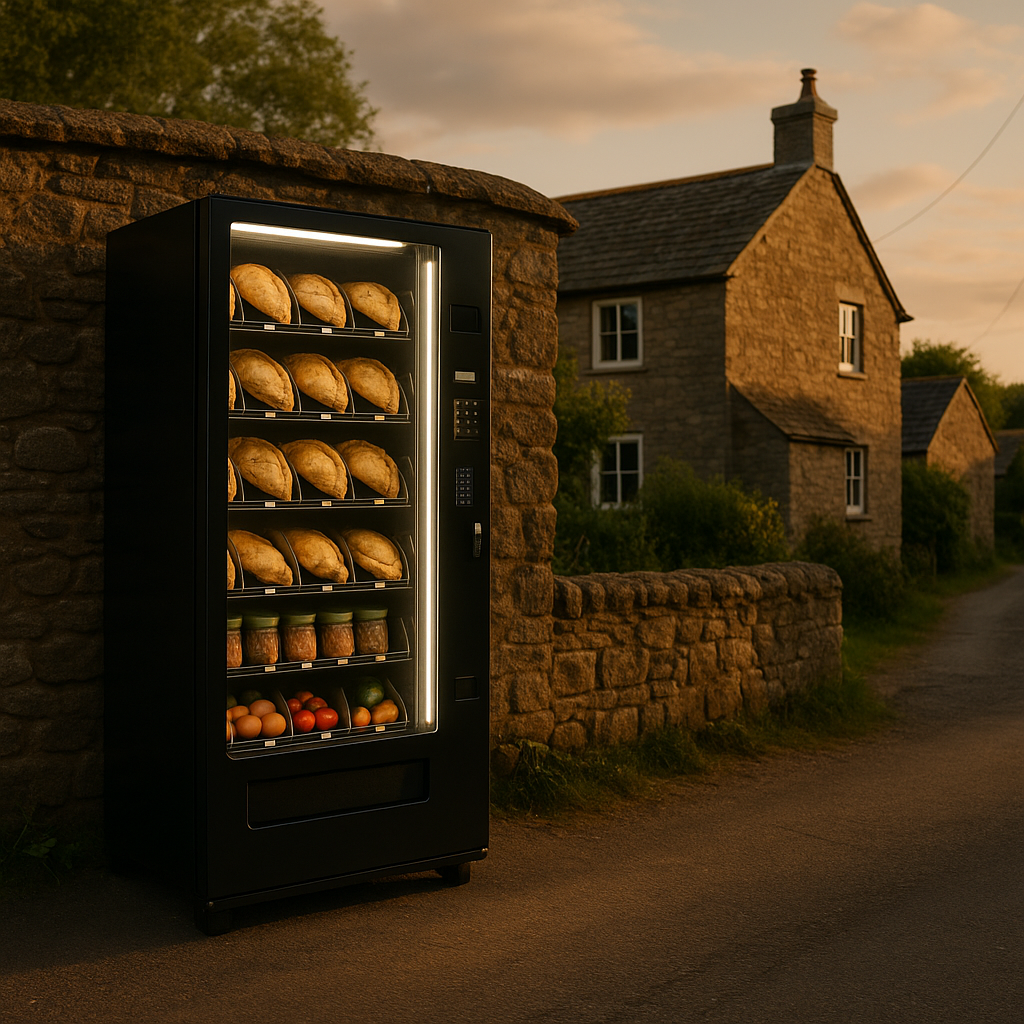
    Unusual vending machine in a British village stocked with local pasties and farm produce

    Hot pasties from a machine, no queue required

    Start in Cornwall, where at least two locations now offer freshly baked pasties from heated vending machines. One, near Redruth, runs 24 hours a day and has reportedly become a minor local legend. The pasties arrive properly warm, in a paper bag, and cost around £4.50. For anyone who has ever stood shivering outside a closed bakery at half past eight on a Sunday morning, this is genuinely life-changing technology. Local bakers supply the machines directly, which means the product is the real thing rather than some frozen industrial approximation.

    It sounds gimmicky. But the business logic is solid: a small bakery extends its reach beyond shop hours without hiring extra staff. The machine does the overnight shift. Brilliant, really.

    Live bait in Norfolk, because of course

    Norfolk has its own contribution to the genre. Anglers near the Broads have had access to live bait vending machines for a few years now, and the format has spread to a handful of spots across Suffolk too. You tap your card, choose your maggots or worms, and off you go. The machines are refrigerated to keep things fresh (for the bait, not the angler), and they typically sit outside tackle shops or near popular fishing spots, operating when the shop itself is shut.

    It is perhaps the most niche product imaginable for a vending machine, but it works perfectly. Fishermen tend to head out at obscene hours of the morning. The local tackle shop opens at nine. A refrigerated box of worms available at 4am is not a joke; it is a genuine service.

    Fresh eggs, raw milk, and the great British farm shop wall

    Rural Britain has been running egg vending machines for years now, but the category has expanded considerably. Raw milk dispensers are turning up outside farms in Cheshire, Shropshire, and Yorkshire, where customers bring their own bottles and fill up by the litre. These operate under specific Food Standards Agency guidance since raw milk carries different rules to pasteurised, and farms have to be licensed to sell it. The machines themselves are essentially large refrigerated tanks with a tap and a payment terminal bolted on.

    Then there are the full farm shop walls: multi-slot machines stocked with seasonal veg, cut flowers, jams, and locally reared meat packs. Somerset has several. Derbyshire has a few. They look like something from a slightly wholesome science fiction film, and they are doing real business for small producers who cannot afford to staff a shop seven days a week.

    Books, vinyl, and things that make you stop walking

    Cities are getting interesting too. A second-hand book vending machine appeared in Sheffield last year, run by a local indie bookshop as a kind of pop-up extension of its collection. You scan a QR code to browse what’s in stock, then pay and retrieve your book. It caused a minor sensation on local social media and was visited by people who had no intention of buying a book but just wanted to see if it was real.

    Edinburgh has had a vinyl record machine tucked in a shopping centre near Princes Street, and there are whispers of a similar setup appearing in Manchester’s Northern Quarter. These are less about convenience and more about theatre: the machine as a bit of a spectacle that pulls people in. Which, in an era where the internet is full of things competing for your attention, a physical oddity on a street corner has its own quiet power.

    The weirdest of the lot

    A hotel in the Cotswolds offers a minibar-style vending machine in the lobby dispensing locally made gin, artisan chocolate, and dog treats. Yes, dog treats. Because the hotel is dog-friendly, and somebody at that hotel had the right idea at exactly the right moment.

    A leisure centre in Leeds trialled a sports nutrition machine stocked with protein bars, electrolyte drinks, and resistance bands. A gym that never fully closes apparently needs a vending machine that treats you like a serious athlete rather than someone who wants cheese and onion crisps at midnight.

    And in a slightly surreal twist, a vending machine appeared in Dundee selling locally made ceramics. Mugs, small bowls, and decorative pieces wrapped carefully in tissue paper and dispensed from a machine that looked from the outside like it ought to contain snacks. The ceramics were made by an artist collective, and the machine was partly a gallery experiment, partly a practical shop. It sold out within a week.

    Why is Britain suddenly so good at this?

    Part of it is infrastructure: contactless payments are so embedded in UK life now that the friction of using a vending machine has almost entirely disappeared. You tap your card, you get your thing. The rise of contactless and mobile payment made the vending machine format viable for far more categories of product than a coin slot ever could.

    Part of it is also the small business mentality. A lot of these machines are run by independent producers and local shops, not big corporations. They are filling specific local gaps rather than trying to scale nationally. The pasty machine works in Redruth because there is a Redruth bakery willing to supply it. The egg machine works outside a farm because the farm is already there.

    There is something quietly appealing about all of this. In the same way that Britons have been making oddly creative decisions about what to buy and where, the unusual vending machines scattered across the UK feel like a very British kind of ingenuity: practical, slightly eccentric, and often attached to a very specific local problem that someone decided to just solve.

    The format is not replacing shops. It is doing something different: extending access, filling gaps, and occasionally just delighting people who walk past and think, wait, is that machine selling live maggots? Yes. Yes it is. And it is probably doing quite well.

  • The Quiet Rise of Dry Socialising Venues Across British Cities

    The Quiet Rise of Dry Socialising Venues Across British Cities

    Something genuinely interesting is happening across Britain’s city centres right now. Alcohol-free bars are opening. Sober social clubs are filling up on Friday nights. Cafés that used to close at 5pm are reinventing themselves as evening hangout spots, serving elaborate zero-proof cocktails and staying busy until midnight. The dry socialising trend has arrived, and it is considerably louder than you might expect from something built around not drinking.

    This is not a niche wellness fad tucked away in a yoga studio. These are proper venues with mood lighting, DJ nights, and queues out the door. Manchester, Bristol, Birmingham, and London are all seeing genuine growth in this space, and the people walking through those doors are not all teetotallers by necessity. Many of them just fancy a night out without the hangover.

    Interior of a dry socialising venue in a British city with crafted mocktails and warm lighting

    What are dry socialising venues, exactly?

    The term covers a broad range of places. At one end you have fully alcohol-free bars like Redemption in London, which has been running since 2013 and has watched its customer base expand dramatically over the past few years. At the other end you have hybrid venues that serve both alcoholic and non-alcoholic drinks but are deliberately designed to make the non-alcoholic options feel just as exciting, just as considered, just as worth staying out for.

    Bristol has seen a cluster of new openings in the Stokes Croft and Clifton areas. Manchester’s Northern Quarter now has at least three dedicated sober-friendly venues that did not exist five years ago. Birmingham’s Digbeth neighbourhood, already known for its independent creative scene, has picked up several café-bars pitching explicitly at the sober-curious crowd. And in London, the number of alcohol-free or low-alcohol focused venues listed on apps like Sofar and Sober Socials has roughly doubled since 2023.

    Why younger Brits are driving this shift

    The numbers back this up pretty clearly. According to the Office for National Statistics, the proportion of 16-to-24-year-olds who say they do not drink alcohol has been rising steadily, sitting above 26% in recent surveys. That is more than one in four young adults choosing sobriety entirely, before you even count the much larger group who are simply drinking less.

    The reasons vary. Cost is a big one. A round of drinks in central London or Manchester can eat through £40 in minutes, and when you are renting a flat with two other people and watching your energy bills, that sort of spend gets scrutinised. Mental health awareness is another factor. Gen Z has grown up with a much more open conversation about anxiety, sleep, and the way alcohol interacts with both. And then there is the social media dimension: if your night out is going to end up on Instagram or TikTok, you might prefer to remember it clearly.

    This connects to something broader happening in how younger people present themselves professionally and socially. The same generation reinventing how they approach job applications and career identity is also rethinking what a good night out looks like. The two things are not unrelated.

    Crafted mocktail served at a dry socialising venue with botanical garnish

    What these venues actually look like inside

    Forget sad orange juice in a pint glass. The drinks menus at serious dry socialising venues have become genuinely creative. Seedlip, Lyre’s, and Æcorn have given bartenders a palette of botanical, spirit-style non-alcoholic bases to work with. You will find drinks built around house-made shrubs, fermented teas, mushroom tinctures, and cold-brew coffee. Some venues charge £8 to £12 for a crafted mocktail, and people pay it without complaint, partly because the overall spend for the evening is still cheaper than a conventional night out.

    The atmosphere is the other thing worth mentioning. A common assumption is that removing alcohol removes fun. It does not. Several of these venues run comedy nights, live acoustic sets, board game evenings, and speed-friending events (like speed dating, but for making new mates, which is genuinely brilliant). The social function of going out has always been about connection, not specifically about drinking. Dry socialising venues are just separating those two things out and finding that the connection part stands up perfectly well on its own.

    The business side of going alcohol-free

    Running a venue without an alcohol licence has some real practical advantages. Licencing costs are lower. Staff training around Challenge 25 policies is simpler. Insurance premiums tend to be friendlier. And the margins on a well-priced non-alcoholic cocktail can hold up respectably against a pint of lager when you factor out the duty.

    That said, these businesses still need customers to find them. Several of the newer venues across Birmingham and Bristol have invested heavily in building their online presence from the ground up, including making sure their websites are technically sound and easy to discover. One owner I read about mentioned using a free SEO checker to audit her site before launch, which is exactly the sort of practical step a small independent venue needs to take when competing against well-established pub chains for search visibility.

    The same creativity that drives independent UK retail reinventing itself online is very much present in this sector. Dry venues lean hard into social content, community building, and word-of-mouth in a way that traditional pubs rarely need to, because their audience is already online and already looking for them.

    Is this a permanent change or just a moment?

    Sceptics will point out that alcohol-free trends have appeared before and faded. Dry January has been a thing since 2013. But the difference now is that the infrastructure is building up around the behaviour. When there are actual venues designed for sober socialising, with actual regulars, actual events programmes, and actual communities forming around them, it starts to feel structural rather than seasonal.

    The fact that major drinks companies have poured investment into non-alcoholic product lines (Heineken 0.0, Guinness 0.0, and Beck’s Blue are all growing faster than their alcoholic siblings in UK off-licence sales) suggests the industry itself sees this as durable. When corporations that built their entire identity around alcohol start taking the sober market seriously, that is usually a sign that something real is happening.

    British cities have always been good at reinventing their social scenes. The same spirit that turned old warehouses into automated fashion hubs is turning old assumptions about nightlife on their head. Dry socialising venues are not the future of going out. They are one version of it, and a version that is clearly finding its crowd.

    Frequently Asked Questions

    What is a dry socialising venue?

    A dry socialising venue is a bar, café, or social club that serves only non-alcoholic drinks, or deliberately centres its offering around high-quality zero-proof options. They look and feel like regular bars but without alcohol on the menu, and many host events like comedy nights, live music, and social meetups.

    Are alcohol-free bars popular in the UK?

    Yes, and growing quickly. Cities like London, Manchester, Bristol, and Birmingham have all seen new alcohol-free or sober-friendly venues open in the past few years. ONS data shows over a quarter of 16-to-24-year-olds in the UK now identify as non-drinkers, which is a significant audience.

    What kind of drinks do sober bars serve?

    Most quality alcohol-free venues serve crafted mocktails using botanical bases like Seedlip or Lyre’s, along with fermented teas, shrubs, cold brews, and alcohol-free spirits. The drinks can be quite sophisticated and often cost between £7 and £12 each.

    Why are young people choosing alcohol-free socialising?

    Cost, mental health awareness, and lifestyle choices are the main drivers. With the price of a round in city centres now very high, and growing awareness of how alcohol affects sleep and anxiety, many younger Brits simply prefer to socialise without drinking. The stigma around not drinking has also reduced significantly.

    How do I find a dry socialising venue near me in the UK?

    Apps and communities like Sober Socials and Club Soda list alcohol-free and sober-friendly events across UK cities. Instagram is also a strong discovery tool, as most of these venues build their following there. Searching locally for ‘alcohol-free bar’ plus your city name usually turns up several options.

  • Why British Weather Forecasting Is About to Get Dramatically More Accurate

    Why British Weather Forecasting Is About to Get Dramatically More Accurate

    British weather forecasting has always been something of a national sport. We moan about the inaccuracies, screenshot the wrong predictions, and smugly remind anyone who’ll listen that the BBC said it would be sunny. But something genuinely exciting is happening right now, and it’s about to make all of that banter a lot less justified.

    The Met Office has been quietly building one of the most powerful weather supercomputers on the planet, and its new partnerships with satellite data providers are changing the game entirely. Not in a vague, press-release kind of way. In a real, measurable, your-life-will-actually-be-different kind of way.

    Dramatic storm clouds over Exeter representing advances in British weather forecasting

    What the Met Office’s New Supercomputer Actually Does

    The Met Office’s latest supercomputing system, built in partnership with Microsoft and housed in Exeter, is capable of around 60 petaflops of processing power. That’s an almost unfathomable amount of number-crunching. To put it loosely, it can run vastly more complex atmospheric models, at finer spatial resolutions, and update them more frequently than was previously possible.

    Older forecasting models might divide the UK into grid squares of several kilometres each. The new system can work at resolutions closer to one kilometre or below, which means a storm rolling in off the Irish Sea can be tracked with much greater precision as it hits the Welsh coast, moves inland, and decides whether Manchester or Liverpool gets soaked first. If you’ve ever wondered why two towns ten miles apart can have wildly different conditions, this level of detail starts to actually address that.

    The supercomputer also allows ensemble forecasting to run at much greater scale. Instead of producing one prediction, the system generates dozens of slightly different scenarios based on varying starting conditions, then analyses the spread. A tight cluster of outcomes means high confidence. A wide spread means uncertainty. Forecasters can then communicate that nuance far more honestly than a single number ever could.

    Where Satellite Data Fits In

    Raw computing power alone doesn’t produce better forecasts. The data feeding those models matters just as much. This is where satellite partnerships become critical. The Met Office works closely with EUMETSAT, the European organisation for the exploitation of meteorological satellites, to ingest enormous volumes of atmospheric data covering temperature profiles, humidity, cloud structure, wind speeds at altitude, and sea surface temperatures.

    Modern weather satellites like the Meteosat Third Generation series can capture imagery at far higher frequencies and resolutions than previous generations. Combined with data from polar-orbiting satellites that sweep the whole planet, the models now have a richer, more current picture of the atmosphere to work with before they even begin calculating what’s coming next. The quality of a forecast is directly tied to the quality of data going in. Better satellites mean better inputs, which means fewer nasty surprises.

    It’s also worth noting that advances in Satellite Installation technology on the ground have made it easier to receive and process high-bandwidth satellite feeds quickly, which contributes to the overall speed of the data pipeline from orbit to forecast.

    High-performance supercomputing hardware used to power British weather forecasting models

    What This Means for Farmers

    British agriculture is weather-dependent in an extremely literal sense. Harvest windows, pesticide application schedules, soil preparation, livestock welfare decisions, all of them hinge on accurate short-range forecasts. A farmer in the Yorkshire Wolds or the Shropshire plains doesn’t just need to know it might rain on Thursday. They need to know whether rain arrives at 6am or 2pm, and whether the ground will be workable by the weekend.

    Improved kilometre-scale resolution forecasting, backed by better satellite data, gives farming communities exactly that kind of granularity. The Met Office already provides dedicated agricultural weather services, and better underlying models will sharpen those products significantly. According to the Met Office’s own agricultural forecasting pages, precision weather data can directly affect crop yield decisions and operational costs. That’s not abstract. That’s pounds in farmers’ pockets.

    Festival Season Is Going to Be More Interesting

    Glastonbury. TRNSMT. Latitude. Boardmasters. The UK festival calendar is packed, and organisers spend months planning logistics that can be derailed in hours by unexpected weather. Stage roofs, electrical safety, crowd flow, welfare tents, all of it changes dramatically when a flash flood warning lands at midnight on the Friday.

    Five-day forecasts have historically been patchy at best for the kind of fine detail that event management requires. With higher-resolution models running on the new supercomputer infrastructure, the accuracy of multi-day forecasts is genuinely improving. The difference between a confident 72-hour forecast and a vague one is the difference between a festival organiser deploying extra drainage equipment early or scrambling at the last minute. Better British weather forecasting doesn’t just help individuals. It saves organisers real money and keeps crowds safer.

    The Commuter Angle (Yes, Really)

    This might sound less glamorous than farms and festivals, but millions of people make daily decisions based on weather. Cycling to work, catching an earlier train before storms arrive, choosing whether the kids need wellies for the school run. The aggregated effect of more accurate short-range forecasts is enormous.

    Transport network operators, particularly those running rail services across exposed routes in Scotland and the north of England, use Met Office data to make decisions about speed restrictions, track inspections, and engineering work scheduling. A sharper forecast means fewer unnecessary delays and a better-targeted response when severe weather actually hits. Network Rail already has formal partnerships with the Met Office for exactly this purpose, and the improved modelling will feed directly into those operational systems.

    How Soon Will We Notice?

    The infrastructure upgrades are not a future project. The new supercomputing capability is already operational and being refined. Model updates are rolling out progressively, and verification data comparing the new forecasts to actual outcomes is accumulating. Meteorologists at the Met Office and in the academic community are already reporting meaningful improvements in the accuracy of five-day temperature and precipitation forecasts over the UK.

    For most people, the change will be subtle at first. Fewer embarrassingly wrong weekend forecasts. A bit more confidence in the five-day outlook. Gradually, the cultural habit of automatically distrusting British weather forecasts might actually start to shift. That would be quite something.

    British weather forecasting has spent decades as the butt of the joke. With the computing muscle and satellite data now in place, the Met Office is making a serious case that the punchline is running out of time.

    Frequently Asked Questions

    How accurate is the Met Office five-day forecast now?

    Five-day forecasts from the Met Office have improved substantially in recent years and continue to improve with new supercomputing infrastructure. Today’s five-day temperature forecast is broadly as accurate as a two-day forecast was in the 1980s, and that benchmark is being pushed further by higher-resolution modelling and better satellite data inputs.

    What supercomputer does the Met Office use?

    The Met Office’s latest supercomputing system is a Microsoft Azure-based high-performance computing environment, significantly expanding on its previous Cray-based systems. It is capable of around 60 petaflops of processing power, making it one of the most powerful weather forecasting systems in the world.

    Does satellite data actually improve weather forecasts?

    Yes, satellite data is one of the most critical inputs for modern weather forecasting. Satellites provide atmospheric temperature profiles, humidity measurements, cloud structure, and sea surface temperatures across the entire globe, giving models far more complete starting conditions. Better satellite data directly leads to more accurate forecast output.

    How does British weather forecasting compare to other countries?

    The Met Office is widely regarded as one of the world’s leading national weather services and consistently ranks among the top performers in international forecast accuracy comparisons. Its combination of dedicated research, long-term satellite partnerships through EUMETSAT, and significant computing investment keeps it competitive with the European Centre for Medium-Range Weather Forecasts.