Vending machines used to mean one thing: a slightly warm can of Fanta and a packet of Wotsits that gets stuck halfway down. Britain, however, has quietly been doing something far more interesting with the format. Across the country, from fishing villages in East Anglia to tin-mine country in Cornwall, genuinely bizarre and often wonderful machines are dispensing things nobody thought could come out of a box. The unusual vending machines popping up across the UK right now are, frankly, a joy.
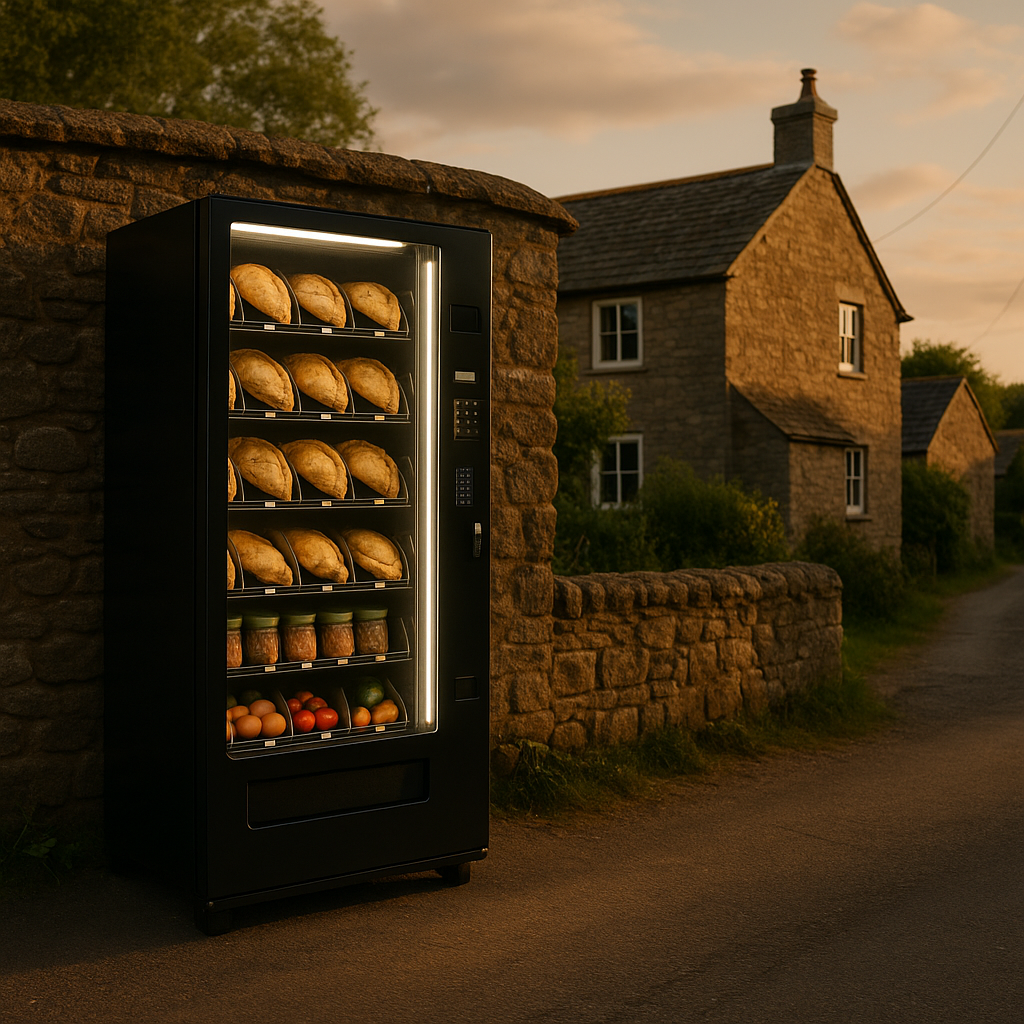
Hot pasties from a machine, no queue required
Start in Cornwall, where at least two locations now offer freshly baked pasties from heated vending machines. One, near Redruth, runs 24 hours a day and has reportedly become a minor local legend. The pasties arrive properly warm, in a paper bag, and cost around £4.50. For anyone who has ever stood shivering outside a closed bakery at half past eight on a Sunday morning, this is genuinely life-changing technology. Local bakers supply the machines directly, which means the product is the real thing rather than some frozen industrial approximation.
It sounds gimmicky. But the business logic is solid: a small bakery extends its reach beyond shop hours without hiring extra staff. The machine does the overnight shift. Brilliant, really.
Live bait in Norfolk, because of course
Norfolk has its own contribution to the genre. Anglers near the Broads have had access to live bait vending machines for a few years now, and the format has spread to a handful of spots across Suffolk too. You tap your card, choose your maggots or worms, and off you go. The machines are refrigerated to keep things fresh (for the bait, not the angler), and they typically sit outside tackle shops or near popular fishing spots, operating when the shop itself is shut.
It is perhaps the most niche product imaginable for a vending machine, but it works perfectly. Fishermen tend to head out at obscene hours of the morning. The local tackle shop opens at nine. A refrigerated box of worms available at 4am is not a joke; it is a genuine service.
Fresh eggs, raw milk, and the great British farm shop wall
Rural Britain has been running egg vending machines for years now, but the category has expanded considerably. Raw milk dispensers are turning up outside farms in Cheshire, Shropshire, and Yorkshire, where customers bring their own bottles and fill up by the litre. These operate under specific Food Standards Agency guidance since raw milk carries different rules to pasteurised, and farms have to be licensed to sell it. The machines themselves are essentially large refrigerated tanks with a tap and a payment terminal bolted on.
Then there are the full farm shop walls: multi-slot machines stocked with seasonal veg, cut flowers, jams, and locally reared meat packs. Somerset has several. Derbyshire has a few. They look like something from a slightly wholesome science fiction film, and they are doing real business for small producers who cannot afford to staff a shop seven days a week.
Books, vinyl, and things that make you stop walking
Cities are getting interesting too. A second-hand book vending machine appeared in Sheffield last year, run by a local indie bookshop as a kind of pop-up extension of its collection. You scan a QR code to browse what’s in stock, then pay and retrieve your book. It caused a minor sensation on local social media and was visited by people who had no intention of buying a book but just wanted to see if it was real.
Edinburgh has had a vinyl record machine tucked in a shopping centre near Princes Street, and there are whispers of a similar setup appearing in Manchester’s Northern Quarter. These are less about convenience and more about theatre: the machine as a bit of a spectacle that pulls people in. Which, in an era where the internet is full of things competing for your attention, a physical oddity on a street corner has its own quiet power.
The weirdest of the lot
A hotel in the Cotswolds offers a minibar-style vending machine in the lobby dispensing locally made gin, artisan chocolate, and dog treats. Yes, dog treats. Because the hotel is dog-friendly, and somebody at that hotel had the right idea at exactly the right moment.
A leisure centre in Leeds trialled a sports nutrition machine stocked with protein bars, electrolyte drinks, and resistance bands. A gym that never fully closes apparently needs a vending machine that treats you like a serious athlete rather than someone who wants cheese and onion crisps at midnight.
And in a slightly surreal twist, a vending machine appeared in Dundee selling locally made ceramics. Mugs, small bowls, and decorative pieces wrapped carefully in tissue paper and dispensed from a machine that looked from the outside like it ought to contain snacks. The ceramics were made by an artist collective, and the machine was partly a gallery experiment, partly a practical shop. It sold out within a week.
Why is Britain suddenly so good at this?
Part of it is infrastructure: contactless payments are so embedded in UK life now that the friction of using a vending machine has almost entirely disappeared. You tap your card, you get your thing. The rise of contactless and mobile payment made the vending machine format viable for far more categories of product than a coin slot ever could.
Part of it is also the small business mentality. A lot of these machines are run by independent producers and local shops, not big corporations. They are filling specific local gaps rather than trying to scale nationally. The pasty machine works in Redruth because there is a Redruth bakery willing to supply it. The egg machine works outside a farm because the farm is already there.
There is something quietly appealing about all of this. In the same way that Britons have been making oddly creative decisions about what to buy and where, the unusual vending machines scattered across the UK feel like a very British kind of ingenuity: practical, slightly eccentric, and often attached to a very specific local problem that someone decided to just solve.
The format is not replacing shops. It is doing something different: extending access, filling gaps, and occasionally just delighting people who walk past and think, wait, is that machine selling live maggots? Yes. Yes it is. And it is probably doing quite well.